
Jingdezhen’s classic sights are all clustered close together, but that doesn’t mean a short visit covers them well. This itinerary comes from a real Qingming-holiday trip — five days, four nights — built around the two things that make Jingdezhen worth the trip: wandering its ceramic districts, and actually making something with your hands.
How Jingdezhen’s Sights Fit Together
Jingdezhen’s main attractions sit close to one another, roughly centered on Taoxichuan. A fully charged e-bike can reach almost any of them, including the farther museums. That proximity is convenient, but it also means the districts can start to blur together: each one is essentially a different pocket of creative ceramic shops, and the specific pieces for sale vary more than the experience of browsing them does.
If time is tight — two or three days — a simpler split works well:
- Day 1: Sculpture Porcelain Factory in the morning (boutique creative shops), then Taoxichuan in the afternoon and evening for the night views, the weekend creative market, and the Yao Yu Zuo art space.
- Day 2: Taoyangli (the Imperial Kiln Museum and the historic district) for a slower, heritage-focused day.
Taoyang New Village’s night market gets a lot of attention online, but the same wholesale-style pieces — cheap, similar, mass-produced — turn up around the edges of Taoxichuan and along the Sculpture Porcelain Factory’s main road too, so it’s easy to skip without missing much.
With four or five days, add hands-on pottery and craft workshops — this is where Jingdezhen genuinely sets itself apart from a typical museum-and-shopping city break. For a heritage-first, single-day version of this trip, see our Core Heritage Highlights Route; for a deeper multi-day dive into the historic kiln sites, see the Ceramic Roots Discovery Route.
A Sample 5-Day, 4-Night Itinerary
Two scheduling decisions made this trip work well. First, the first night was spent staying inside Sanbao Village itself rather than commuting in — that meant experiencing the village in the quiet of early morning and late evening, at the cost of some transport hassle getting in and out during a holiday. Second, the Jingdezhen Ceramic Museum, the site’s worst queues, was scheduled for the very last day, once the holiday crowds had thinned out. As a rule of thumb, plan for no more than two attractions plus one hands-on activity per day — the days fill up faster than they look on paper.
Day 1: Arrival & Sanbao Village (evening)
Arrive early afternoon and head straight to a guesthouse inside Sanbao Village. In the late afternoon, walk the village’s main strip toward the entrance, stopping at its well-known landmarks, then have an early dinner around the Xunwei Sanbao food cluster. After dark, head over to the Taoyang New Village night market for an hour or two of browsing and buying.
Day 2: Sanbao Village (full day)
Spend the morning and early afternoon exploring the stretch of Sanbao Village between the coffee shops and Sanbao Peng — this section, with its hills, lawns, and working studios, is more rewarding than the more Instagrammed section near the entrance. Rent a bike and ride the whole way. In the afternoon, fit in a hands-on workshop (glass-making is a good option if there’s a studio along your route), then have lunch or dinner at Sanbao Bieyuan, a large, photogenic restaurant with private rooms — worth the stop even without the food.
Day 3: Sculpture Porcelain Factory & Bisque Painting
Spend the morning browsing the Sculpture Porcelain Factory’s main road and side lanes — a mix of Taoxichuan’s design sensibility and Taoyang New Village’s more affordable, everyday stalls. In the afternoon, settle into a bisque-painting or pottery workshop nearby; with kids in the group, budget a good three hours rather than the “one hour” quoted online.
Day 4: Taoyangli, the Ceramic Museum & Hanfu
Check into a hotel beside the Taoyangli district around midday. Start with the Jingdezhen Ceramic Museum (booked well in advance — see the tips below), keeping the visit to two hours or so. Back in Taoyangli, rent hanfu for the evening and wander the lantern-lit lanes, red walls, and stone streets once the sun goes down — this is when the district looks its best. The Imperial Kiln Museum inside Taoyangli stays open until 8pm, so it’s worth folding into the same evening.
Day 5: Taoyangli (unhurried) & Departure
With the holiday crowds gone, this is the day to slow down. Watch the NPC-style street performers, take in the Ming-and-Qing-era kiln district layout at Xu Family Kiln, and browse the small workshops where artisans are still hand-painting porcelain. In the afternoon, walk over to neighboring Zhongshan North Road, a pedestrian street built to evoke old Jingdezhen’s porcelain-trade heyday, before heading to the train station in the early evening.
Sanbao Village
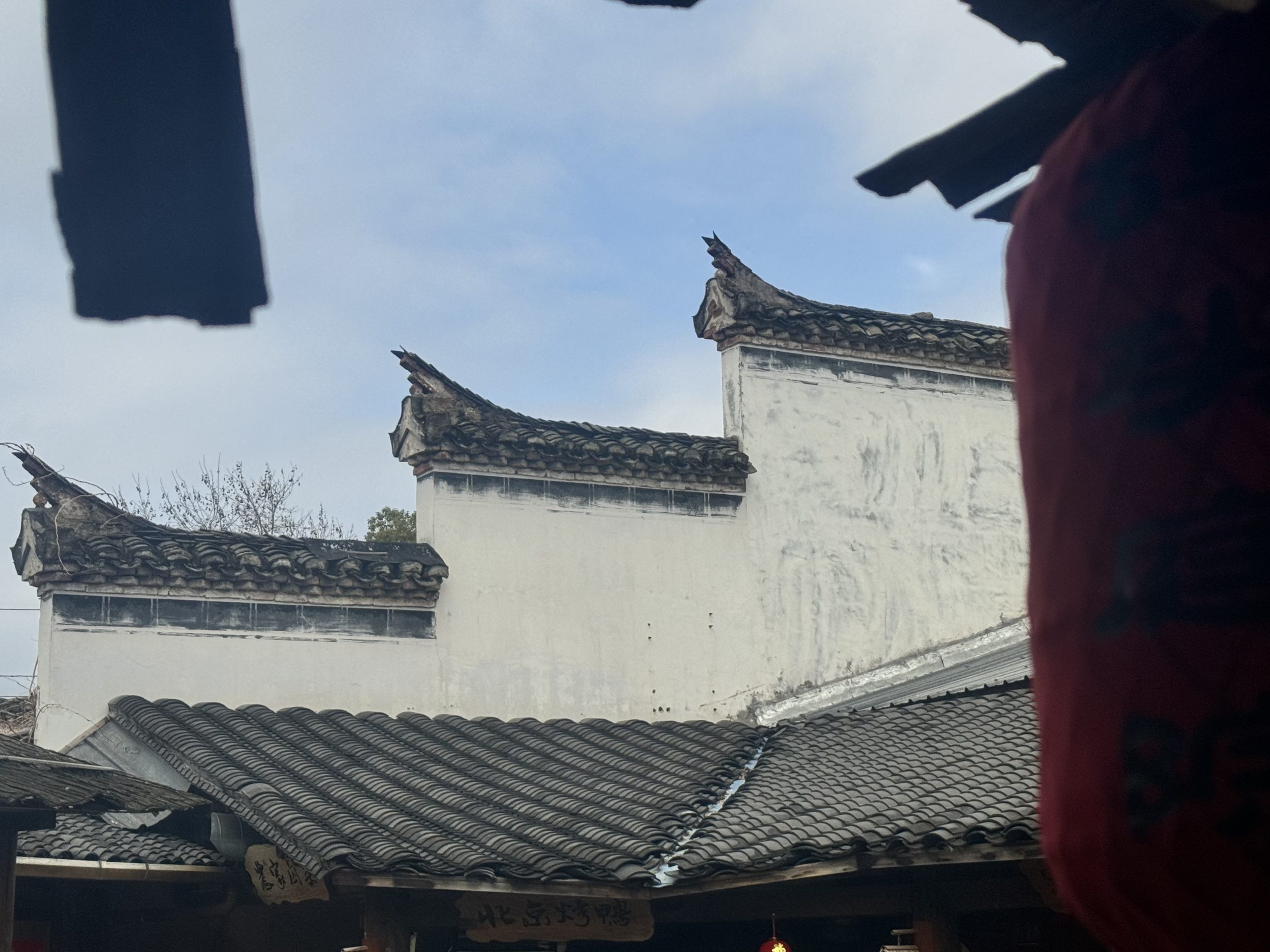
Sanbao is a long, narrow village along one main road, dotted with ceramic and craft shops, the Sanbao Art Museum, and the Sanbao Peng art district. It’s one of Jingdezhen’s newer must-visit spots, and while individual shops aren’t necessarily unique, casual wandering pays off.
- Getting around: the village runs about 3km from the entrance to the central coffee-shop cluster, and roughly 5km to the art museum and Sanbao Bieyuan at the far end — too far to comfortably walk round-trip. Rent an e-bike (about ¥30/day) just inside the entrance, or use the village’s ¥15-per-person shuttle, which has unlimited boarding but can mean long queues during holidays.
- Holiday traffic restriction: on public holidays and weekends, private cars and even rented e-bikes are barred from entering the village during the day. Confirm this before you travel, and rent a bike only after you’re already inside the entrance — there are plenty of rental stands there.
- Best time to visit: early morning or after dark, once the day-trip crowds have cleared.
Taoyang New Village Night Market
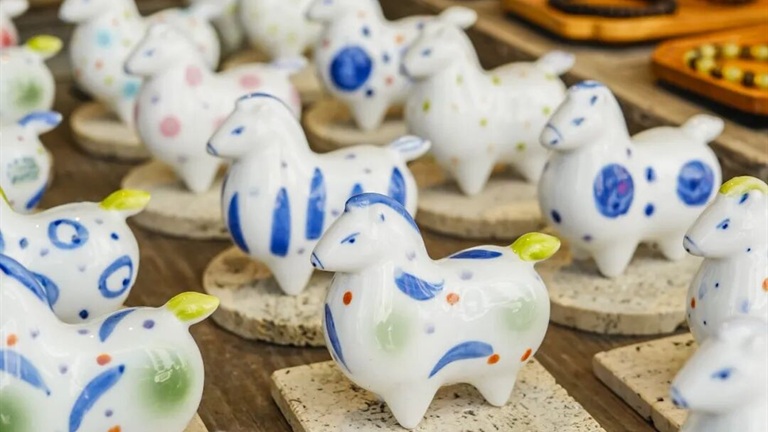
This is Jingdezhen’s biggest ceramic wholesale market — bracelets for ¥10 for five, fridge magnets two for ¥15, full tea sets for a few dozen yuan. It’s cheap and fun, though quality is basic and the same designs repeat across stalls. It makes a good first stop for an evening of browsing; one main strip is enough to see everything, and an hour or two is plenty. If time is short, it can be skipped entirely, since near-identical stalls line the edges of Taoxichuan and the Sculpture Porcelain Factory’s main road too. Light haggling is expected, though there isn’t much room to negotiate.
Taoxichuan

Converted from the former Universe Porcelain Factory, Taoxichuan is a large, unfenced district built around designer ceramic studios, exhibitions, cafes, bars, hotels, and a well-known weekend creative market. It’s noticeably more upscale than Sanbao, Taoyang New Village, or the Sculpture Porcelain Factory, and it’s worth saving for an evening visit for the lighting alone.
The district is sprawling, but the essentials cluster in its center-right section: the Yao Yu Zuo art space (a striking kiln-shaped building and Taoxichuan’s newest landmark), the Sugar King Zhou Yi shop for extraordinary sugar sculpture work, and the weekend creative market — the country’s largest of its kind, with roughly 2,000 stalls, running Friday through Sunday and not fully set up until around 6pm. If something catches your eye, buy it on the spot: these are one-off, handmade pieces with no second vendor selling the same thing, and stalls can be genuinely hard to relocate later in a crowd. If you’re unsure, note the vendor’s WeChat or Xiaohongshu contact and follow up online.
Sculpture Porcelain Factory (Diaosuciyanchang)
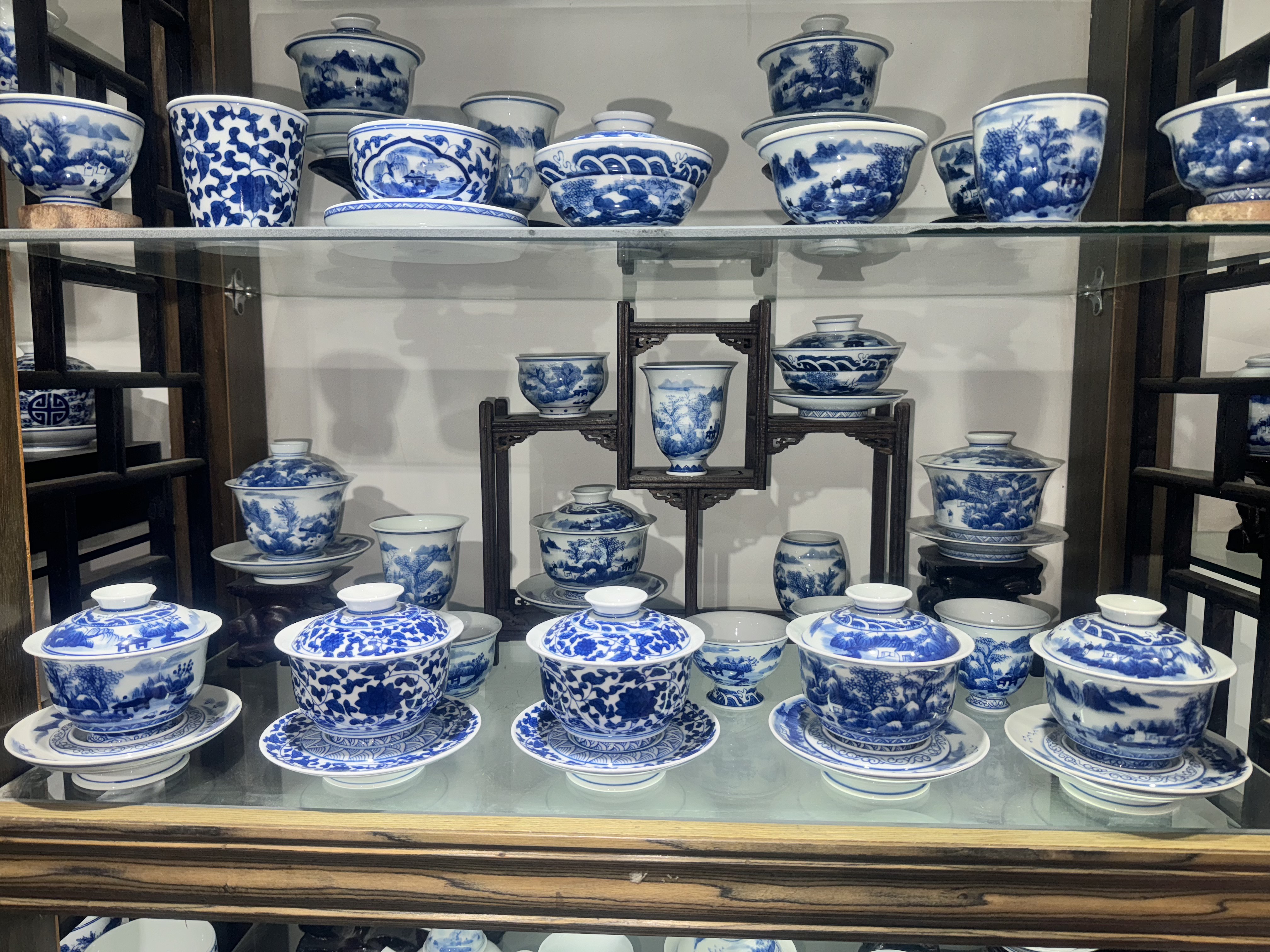
Another major creative district, the Sculpture Porcelain Factory sits between Taoxichuan and Taoyang New Village in character — it has Taoxichuan’s artistic edge alongside more accessible, everyday shopping. Open daily, 9am–6pm. On holidays, the main gate area is closed to traffic, so plan on taxis rather than an e-bike, and expect the ride in to take a while.
The site splits into a central main road and a web of side lanes with individual boutiques — most online store-hopping guides recommend a similar set of shops, but simply wandering into whatever catches your eye works just as well. It’s also one of the most convenient places to fit in a hands-on workshop, since so many studios are clustered nearby.
Taoyangli & the Ceramic Museums

Taoyangli rewards visiting when it’s quiet — go on a holiday’s last day, or on a weekday, rather than at the peak. It combines the historic Imperial Kiln district with hotels, restaurants, and hanfu rental shops, and it’s easy to spend a full day, or a full evening, wandering it.
The Jingdezhen Ceramic Museum, China’s first large-scale museum dedicated to porcelain, sits nearby and is worth two hours even with a light visit — its most talked-about piece recently is a “wordless Buddha” figure that draws crowds on its own. For the full picture of what’s on site and how the reservation system works, see our dedicated Ceramic Museum reservation guide. In short: book seven days ahead through the “畅游景德镇” mini-program, with new tickets released daily at midnight, 8am, and noon; adults are capped at five tickets each, and children don’t need a ticket at all.
Inside Taoyangli, the Imperial Kiln Museum is free but requires both a reservation and a paid Taoyangli entry ticket (¥58 per person, valid for unlimited entry over three days — some hotels near the district include it). It’s closed Mondays, but open until 9:30pm the rest of the week, with the district itself closing at 10pm — worth timing a visit for after dark. For the full history behind the imperial kiln sites and Longzhu Pavilion, see our guide to Jingdezhen’s five UNESCO heritage sites.
Hands-On Pottery Experiences
This is where Jingdezhen earns its reputation. Between throwing pots, painting bisque, working glass, and short-format certificate courses, workshops are everywhere and the industry is mature. Rather than chasing the “best” studio online, it’s usually more realistic to pick whichever shop is nearby when you’re ready — most first-time visitors, and especially kids, are after the experience of finishing a piece, not professional-grade output. Whatever the activity, and however long it’s advertised for, budget at least two hours.
Throwing & Shaping Clay

The most popular option, and the one most closely associated with the city: shaping your own bowl, plate, or spoon from raw clay. Some studios separate wheel-throwing from hand-shaping and charge for each; wheel work in particular needs an instructor’s help, so studios with fewer students per teacher tend to give a much better experience. A full package — throwing, shaping, painting, glazing, firing, and shipping — usually runs ¥80–100 per piece, though firing, glazing, and mailing are sometimes billed separately, so ask up front. Fired pieces typically take at least a month to arrive.
Painting Bisque (Su Pei)
The easiest entry point: pick an unglazed bisque piece and paint or write directly on it. Most pottery studios offer this, and it typically takes about two hours. Better-equipped studios provide printed templates, carbon-transfer paper, or a projector for anyone who doesn’t want to freehand a design. Expect ¥30–80. Old Factory Street (798), near the Sculpture Porcelain Factory, is a dedicated bisque-shopping street — blanks run about ¥10 each, and nearby studios charge roughly ¥20–40 for a full day of painting, a good option for anyone with time to spare and a creative streak.
Glass Work
Glass work splits into two formats. Kiln-formed glass is billed by the hour rather than by piece — an instructor demonstrates the basics and you take it from there, with output varying a lot by skill. Expect ¥80–100/hour, and check whether the studio includes finishing help, since most beginners can’t complete a piece unassisted; because it involves open flame, one-on-one instruction is worth prioritizing. Glass-blowing, for actual drinking glasses, is billed per piece at around ¥250 and isn’t well suited to young children — it’s hard to control, low on payoff for a first attempt, and the finished glass is fragile.
Mosaic Porcelain Art
The lowest barrier to entry, and a good option for very young kids: broken porcelain shards glued into a pattern, usually from a template. It takes about an hour and runs ¥80–100 per piece.
Planning a Holiday-Season Visit
- Book the Ceramic Museum early. It’s the single most crowded stop in the city — reserve seven days out and go on your last day in town if possible, once holiday crowds thin.
- Expect Sanbao Village’s daytime vehicle restrictions on public holidays and weekends — rent transport only after you’re inside, and build in extra time getting in and out during peak evening hours.
- Cap each day at two sights plus one workshop. Even a “quick” hands-on activity tends to run two to three hours once you include setup, instruction, and finishing.
- Don’t over-plan the shopping districts. Sanbao, Taoyang New Village, Taoxichuan, and the Sculpture Porcelain Factory all sell overlapping goods at different price points — pick two or three rather than trying to see them all.
- An e-bike is the most efficient way to cover long stretches like Sanbao Village or the distance between districts, when local restrictions allow it.
Plan Your Own Trip
This itinerary works well as a template, but the right pace and mix depends on how much time you have and what you’re most interested in — heritage sites, hands-on workshops, or the shopping districts. If you’d like local help getting the logistics right, our Full-Day Guided Experience can cover any of these routes with a private, English-speaking guide, or request a custom itinerary built around your own dates and interests.
Have a Question About This Trip?
Send us a quick note and we will get back to you.