
What to eat in Jingdezhen

Meat-patty soup, cold rice noodles, jiaozi ba and more: what locals in Jingdezhen actually eat, what it costs, and how to order it yourself.

Free guide11 local dishesPrices in RMBTips on WhatsApp
Street food cooking on Fuzhou Lane.
Overview

A free guide from a local

This is the food Jingdezhen grew up on, and you don't need a tour to enjoy it: everything here can be found on your own. If you'd like our favourite stalls, message us on WhatsApp and we'll send them over, free.

The food

What to eat

Prices are typical ranges in RMB (¥). Street stalls sit at the low end, sit-down restaurants at the high end. With more visitors in town, most of these are available all day.

A clay pot of Jingdezhen meat-patty soup with a pork patty in clear broth
肉饼汤 · ¥5–8

Meat-patty soup

A Jingdezhen breakfast staple: seasoned minced pork steamed in a small individual pot until it makes its own broth. Locals usually order it with a plate of cold rice noodles.
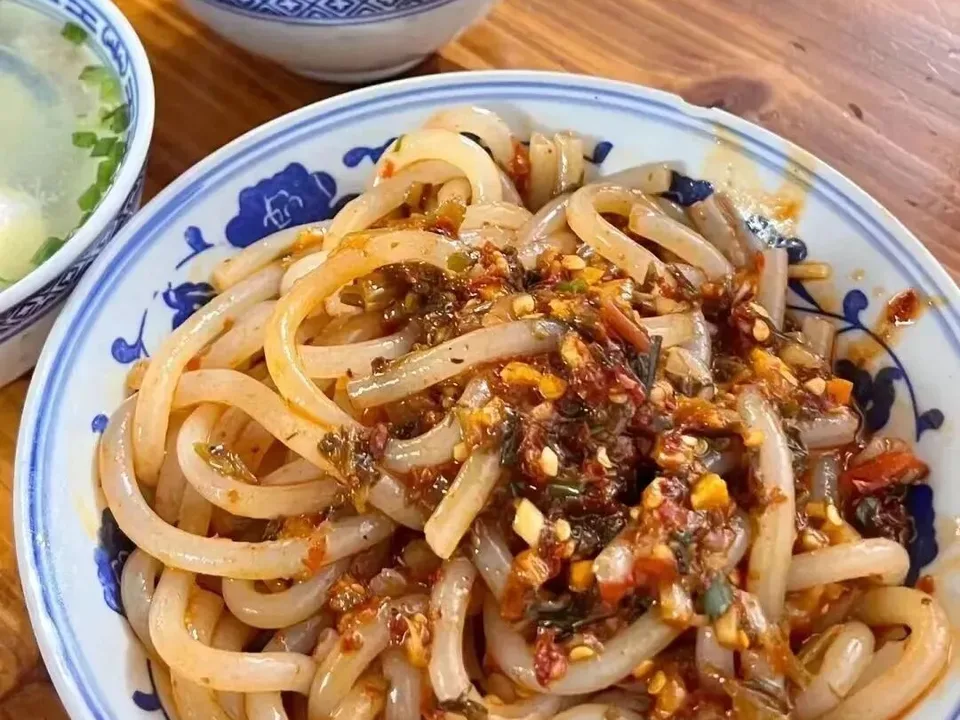
Thick Jingdezhen cold rice noodles tossed with chili and chopped radish in a blue-and-white bowl
冷粉 · ¥5–8

Cold rice noodles

Jingdezhen's own rice noodles: chopstick-thick, made from fermented rice, with a faint tang. Tossed with chopped radish, chili, Sichuan pepper oil, a little tangerine peel and sesame oil. The other half of the classic Jingdezhen breakfast.
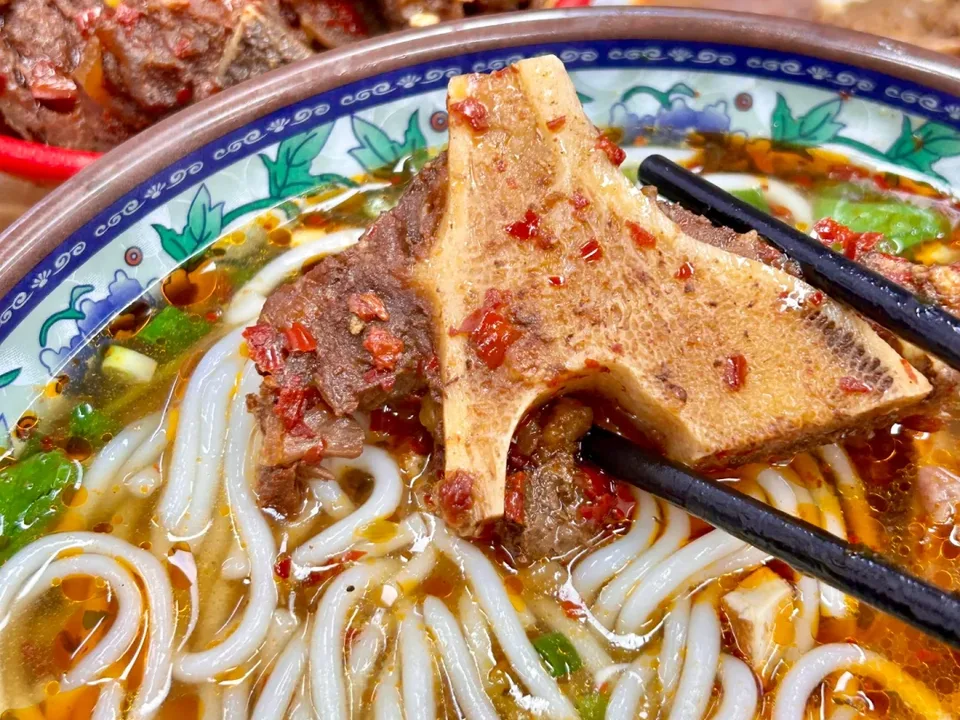
A spicy beef bone held over a bowl of rice noodles, Jingdezhen beef bone rice noodles
牛骨粉 · ¥18–25

Beef bone rice noodles

A plate of beef bones fished out of a pot of fiery red broth, plus a bowl of mild rice noodles. Gnaw the bones first, then stir the noodles into the spicy juices. The noodles aren't spicy but the bones are, very, and there's no mild version: if you don't handle heat well, skip it or have plenty of water ready.

Fried dough sticks wrapped in sticky rice and rolled in black sesame and sugar
油条包麻糍 · ¥5–10

Fried dough stick in mochi

From Leping, just outside the city: warm sticky rice rolled in black sesame and sugar, wrapped around a freshly fried dough stick. Crunchy, chewy, sweet. About ¥5 plain; extras like pork floss cost a little more.
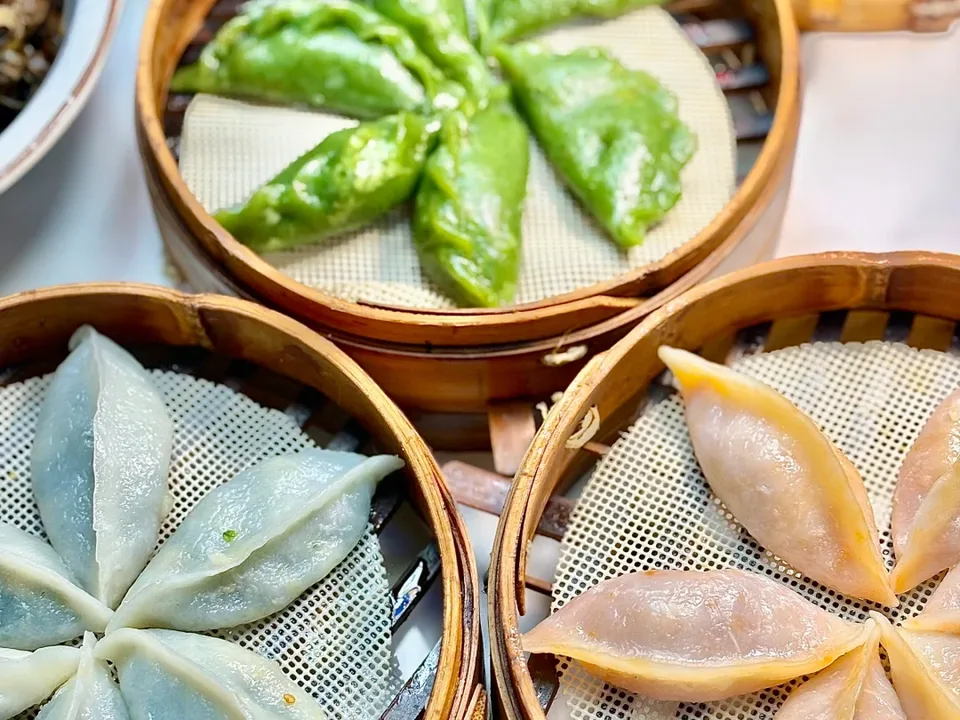
Bamboo steamers of jiaozi ba, Jingdezhen rice-flour dumplings with different fillings
饺子粑 · ¥1 for 3–4

Jiaozi ba

A Jingdezhen breakfast favourite: a soft, chewy rice-flour wrapper folded like a large dumpling. Fillings vary, from shredded radish and chili to minced pork and tofu, or chives and dried tofu.
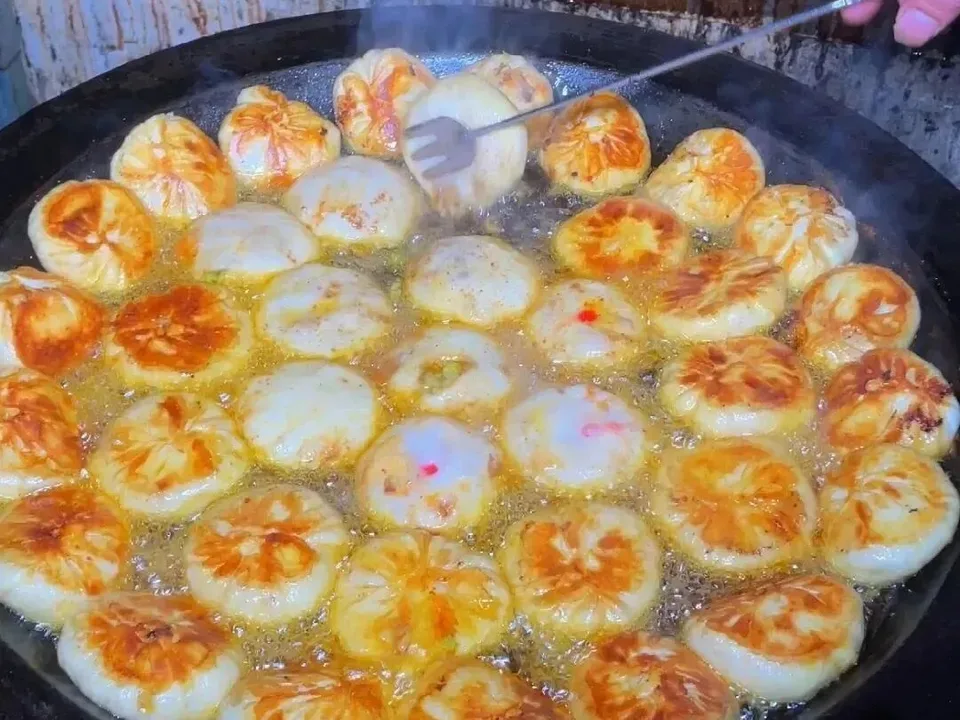
Pan-fried buns sizzling in a large flat pan at a Jingdezhen street stall
煎包 · ¥1–1.5 each

Pan-fried buns

Fried in huge flat pans until the bottoms turn crisp. Look for the stall with the longest queue.
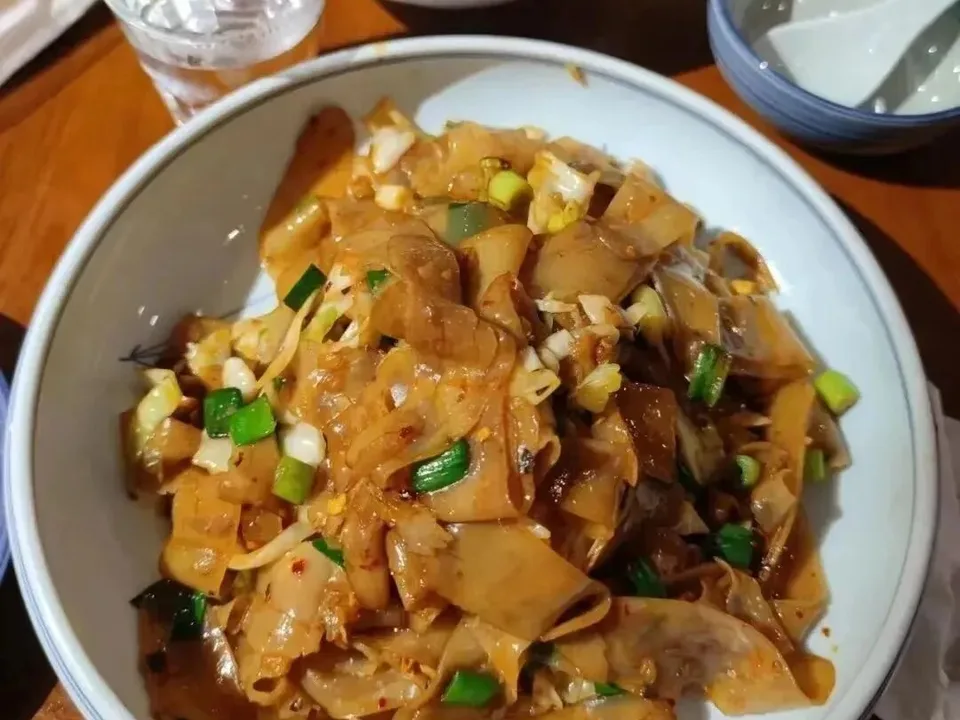
A plate of sliced alkaline rice cake stir-fried with egg and greens
碱水粑 · ¥10–25

Alkaline rice cake

Chewy rice cakes made from rice paste and alkaline water, found all over the city. Usually stir-fried with egg and greens; at restaurants you can also order it with smoked cured pork.
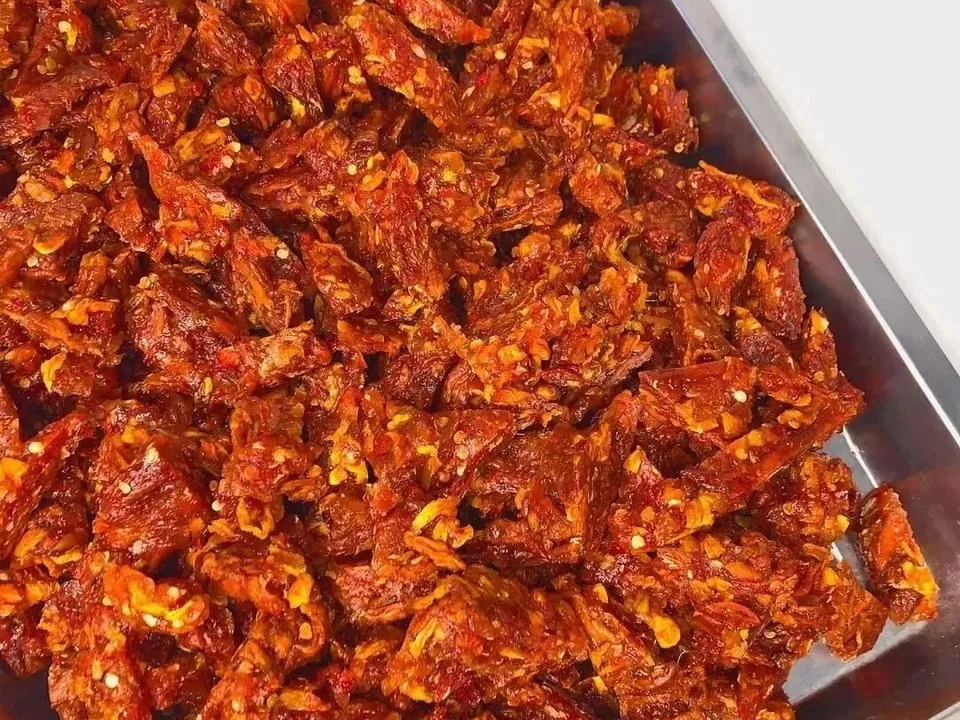
A tray of red chili rice cake pieces, a Jingdezhen snack
辣椒粑

Chili rice cake

Chili and sticky rice pressed into thin sheets and dried. Often called the grandfather of latiao, China's favourite spicy snack. A good one to take home.

Sit-down

Order these at a restaurant

Jingdezhen home cooking at its best. These are restaurant dishes, best shared between two or more people.

A glossy leg of porcelain-clay baked chicken lifted from its wrapping
瓷泥煨鸡 · Restaurants

Porcelain-clay baked chicken

Only in the porcelain capital: a whole seasoned chicken wrapped in lotus leaves, sealed in porcelain clay mixed with Shaoxing wine, and slow-baked, traditionally in a kiln. Crack it open for tender, fragrant meat.
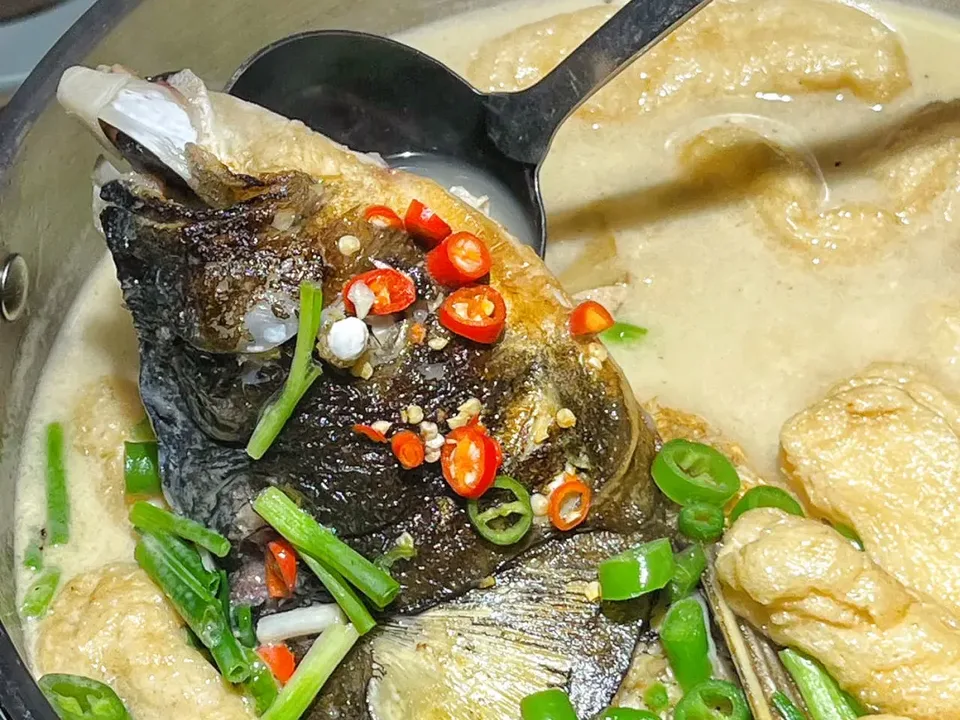
A fish head stewed in milky broth with fried tofu strips, chili and scallions
豆冲炖鱼头 · Restaurants

Fish head with dou chong

A fish head pan-fried, then stewed with dou chong, thick strips of fried tofu that soak up the broth. The soup turns milky white, with a little red chili. A version of it appeared on the documentary A Bite of China.
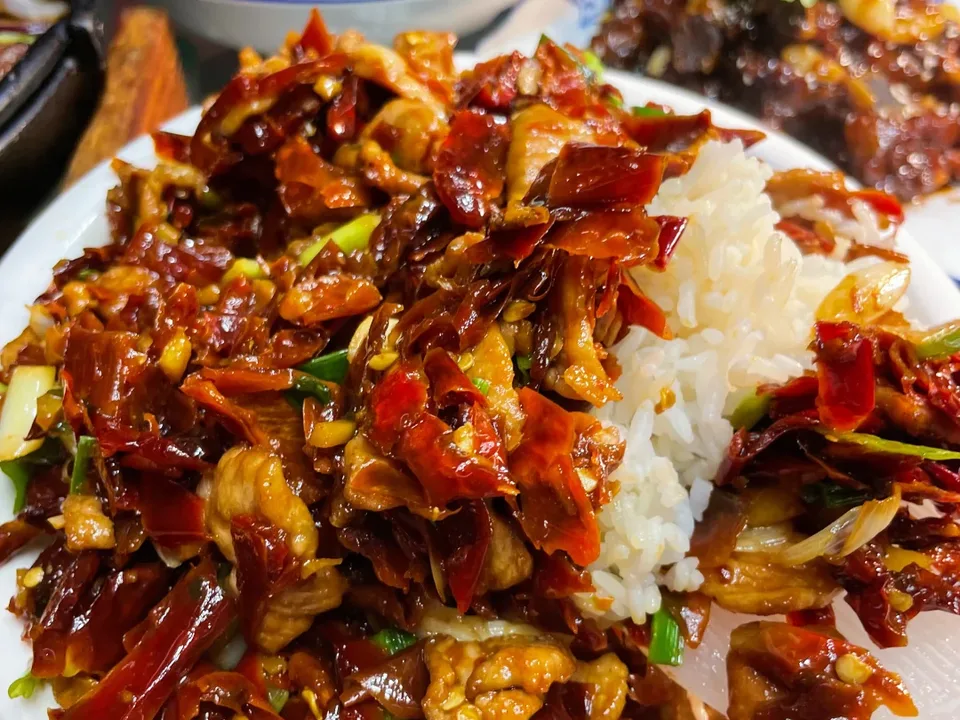
Pork stir-fried with dried local chili shells and garlic leaves, served over rice
辣椒炒肉 · Restaurants

Chili fried pork

Pork belly stir-fried with local dried chili shells, which are more fragrant than hot, and garlic leaves. Spoon it, juices and all, over a bowl of rice.
Ordering

How to order

  1. Show the name

    Most stalls don't have English menus. Show the vendor the Chinese name from this page and point: that's how most locals order too.

  2. Say how spicy

    Ask for less chili with 少辣 (shǎo là) or none with 不要辣 (bú yào là). It works for most dishes, but not for beef bone rice noodles.

  3. Pay by QR code

    Most stalls take Alipay or WeChat Pay. Foreign visitors can link an international card to Alipay. Carry a little cash as backup.

Where to eat

Where to eat

Fuzhou Lane · 抚州弄

The easiest place to try everything at once: a snack street that has become popular with visitors in recent years, with most local favourites in one place. Ask locals, though, and everyone has their own favourite little shop near home, each with its own take. If convenience and variety matter most, one stop at Fuzhou Lane is all you need.

All day, every day

Most of these dishes are easy to find from morning to night, all over the city. Prices vary a little depending on the area and whether it's a stall or a restaurant.

Want specific stalls?

Tell us on WhatsApp when you're visiting and what you like to eat, and we'll send you our favourite spots, free.

In preparation: make a Jingdezhen breakfast. We're working on a hands-on morning where you'd make meat-patty soup and cold rice noodles yourself, the way a Jingdezhen family does. It isn't running yet and can't be booked. If you'd like to hear when it starts, send us a message.

Questions

Frequently asked

Is the food very spicy?

Jiangxi food leans spicy. At most stalls you can ask for less chili (少辣, shǎo là) or none (不要辣, bú yào là). The exception is beef bone rice noodles, which only come spicy.

Are there vegetarian options?

Some. Cold rice noodles, alkaline rice cake (usually stir-fried with egg and greens) and chili rice cake are often meat-free, but recipes vary from stall to stall, so ask. Broths and fillings often contain pork.

Do I need to speak Chinese?

No. Show the vendor the Chinese name from this page and point. Payment is usually by QR code, so there's very little to say.

Can you take me there?

This page is a free guide, but a food stop can be added to any of our experiences as an optional extra. Message us on WhatsApp and we'll fit it in.

Get started

Planning a trip to Jingdezhen?

Tell us when you're coming and what you're into. We'll point you to the right food, studios and sights.