
China has made porcelain for two thousand years, in dozens of kiln towns from Yaozhou to Longquan to Dehua. So why, when people say “porcelain capital,” does everyone mean the same place? The answer is not one lucky advantage but four that arrived together: the right clay, the right fuel and transport, a production system built on extreme specialization, and a six-hundred-year head start on the rest of the world.

Where the Name Comes From
The town was not always called Jingdezhen. For centuries it was known as Changnan. In 1004, the first year of the Jingde reign of Emperor Zhenzong of the Song dynasty, the court ordered porcelain from here marked with the reign name, and the town took that name: Jingde-zhen. “Zhen” simply means town, which is why older English books and maps sometimes call it Jingde Town, or write it as Jing De Zhen.
The date still matters today. The city’s official “Made in Jingdezhen” seal carries the number 1004, as we explain in our guide to Jingdezhen porcelain marks.
The Clay Was Already Perfect
Porcelain starts with stone. Porcelain stone (瓷石), ground down and refined, is the base material for glaze-fired ceramics, and the hills around Jingdezhen happen to sit on an enormous reserve of it. A survey from the early 1950s calculated that the porcelain clay reserves in just three nearby counties, Fuliang, Poyang, and Yugan, would last 1,300 years at 1955 consumption rates. That is before anyone had to look particularly hard for it.
Stone alone would not have been enough to build a reputation on. What actually set Jingdezhen apart was kaolin, a white clay rich in aluminum oxide. Mixed into the traditional porcelain stone paste, kaolin dramatically increases the strength of the fired body, which is why Jingdezhen could produce pieces as delicate as eggshell-thin cups and as massive as dragon urns without either cracking or slumping in the kiln. The combination of porcelain stone and kaolin is considered one of the genuine turning points in the history of Chinese ceramics.
The material takes its name directly from Jingdezhen. Kaolin is mined at Gaoling village, northeast of the city, and when the French Jesuit missionary Père d’Entrecolles described local porcelain production in the early 18th century, he used the village’s name for the clay. “Gaoling” entered European languages as kaolin, and Jingdezhen’s dirt got a name recognized on every continent.
The mine is still there too. Walk the slopes above Yaoli, in Fuliang County, and it’s hard to tell where the digging stops and the mountain starts — collapsed shafts, the grooves of old sluices, stone basins where ore was once washed by hand, layered with the residue of a thousand years of extraction. A local ranger at Gaoling put the yield in blunt terms: “You dig a hundred pounds of ore to get less than one pound of the purest clay. The old-timers called it ‘monkey oil.’”

Fire, Water, and a Convenient Map
Clay is only step one. Wood-fired kilns need enormous quantities of fuel, and Jingdezhen is ringed by mountains dense with pine forest, close enough to supply timber without a punishing haul. The Chang River runs directly through the city and connects to the wider Yangtze watershed, which meant finished porcelain could be packed onto boats and shipped out toward the rest of China, and eventually the rest of the world, without fighting overland roads. Clay, fuel, and transport all sat within a days’ walk of each other. Few other kiln towns in China had all three.
Traces of the old docks are still there along the riverbank — Sanlümiao Wharf, Zhongdu Crossing, Lishi Ferry, their stone steps worn smooth by generations of porters. A Qing-dynasty bamboo-branch poem describes what the waterfront looked like when the kilns were firing: bonfires burning through the night on both banks, cargo boats packed gunwale to gunwale for miles, a river town in constant, glowing motion.
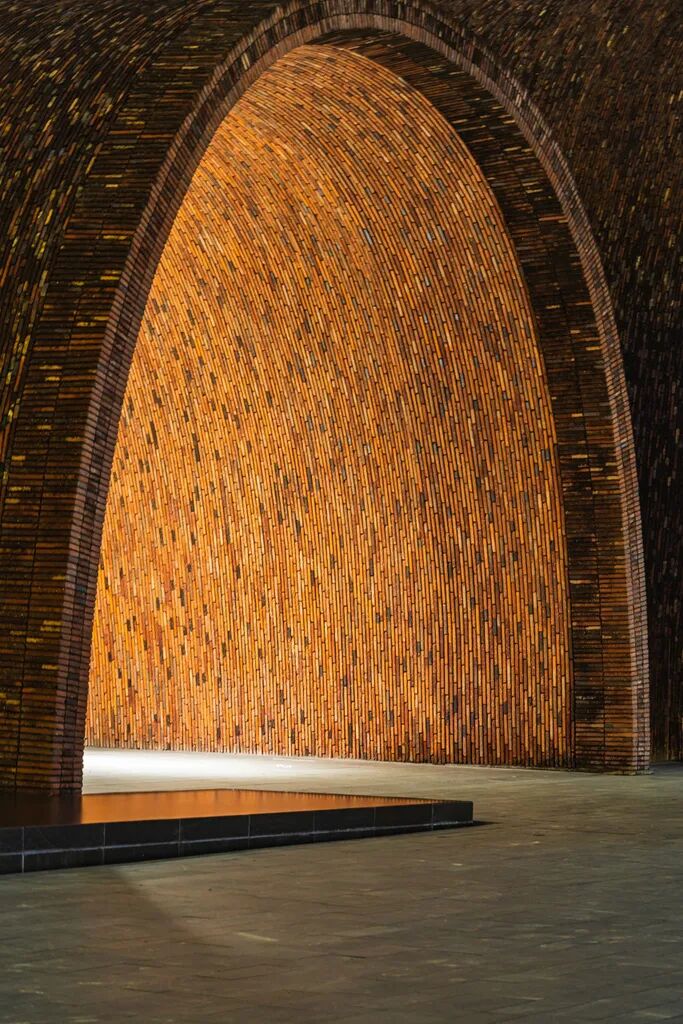
Walk inland from the docks today and the old lane network still carries the memory of it: nine and a half streets, eighteen alleys, one hundred and eight lanes, many still named for the trade once done there. This is what a city looks like when it gets designed around a single craft.
Seventy-Two Pairs of Hands
In 1278, the Yuan court established the Fuliang Porcelain Bureau in Jingdezhen, the first time a Chinese government had placed official administration over a kiln town’s production. By the Ming and Qing dynasties, the Imperial Kiln here was firing porcelain exclusively for the court, and imperial taste, filtered through strict standards for form, glaze, and decoration, pushed local technique forward generation after generation.
The more consequential shift, though, was organizational. Jingdezhen broke away from the small workshop model, where one craftsperson carried a piece from raw clay to finished object, in favor of radical specialization. The Ming dynasty text Tiangong Kaiwu records it directly: “a single vessel passes through seventy-two hands before it is complete.” Kneading the clay, throwing it, trimming it, painting it, glazing it, firing it: each stage belonged to a different specialist who did nothing else. That division of labor let every step get pushed to a level of skill a generalist could never reach, and it let output scale in a way no single-workshop system could match.

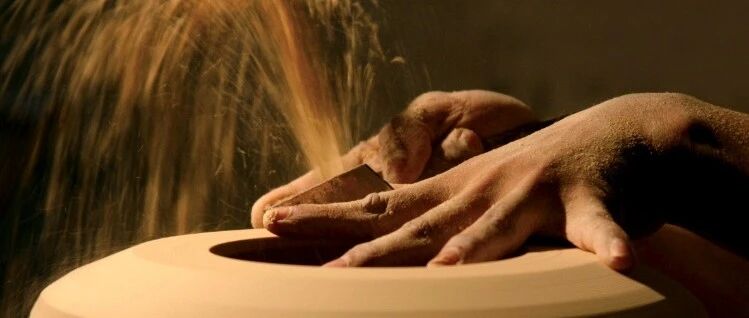
That system never really stopped. Zong Hongxin started learning to trim pottery from his father at sixteen. Trimming, or lipi, is one of the most demanding of the seventy-two steps: the leather-hard bowl spins on the wheel while the potter leans in close, blade tracing the wall, shaving off dust as fine as flour, getting the thickness even by feel in the fingertips alone. “A little too much pressure, a little too little,” he says, “and it comes out wrong in the kiln.” He’s been doing this one thing for more than forty years.
Curious what all seventy-two steps actually look like start to finish? We break the whole process down in How Jingdezhen Porcelain Is Made.
The White Gold That Left China
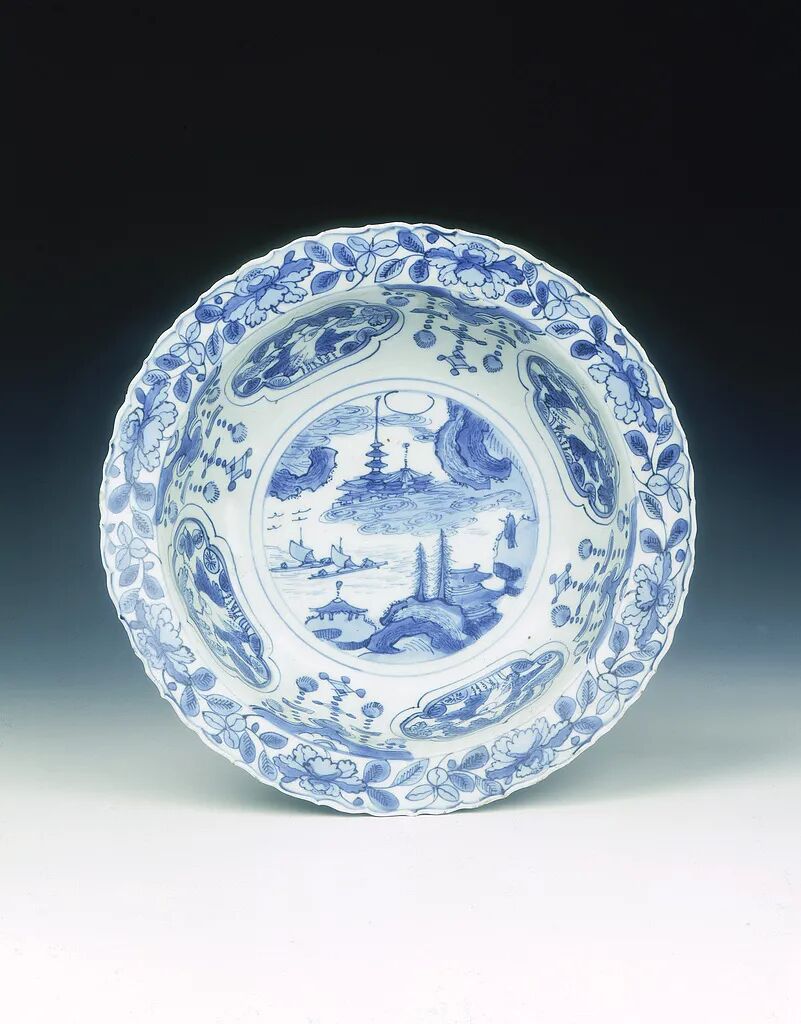
By the 16th century, Jingdezhen porcelain was leaving China by the shipload along the maritime Silk Road, reaching more than thirty countries and effectively making the city the world’s porcelain manufacturing center, long before “globalization” was a word anyone used. In Europe, porcelain was prized as “white gold.” Marco Polo’s travel writing praised Chinese porcelain as “more beautiful than any other ware, lighter and more graceful than even silverware.” Nobody in Europe could reverse-engineer it, and the journey east was long and dangerous, so what did arrive became the kind of thing royal courts fought over.
Portugal’s King Manuel I kept an extensive collection at São Vicente Palace, and his successors went further, embedding 272 blue-and-white porcelain pieces into the ceiling of a dedicated “porcelain room.” In France, the Palace of Versailles built the Trianon de Porcelaine specifically to display Chinese porcelain. Pieces from Jingdezhen are still held in major museum collections around the world today, from Lisbon to London.
Augustus the Strong, Elector of Saxony, is said to have traded a regiment of his own cavalry for a collection of Kangxi-era porcelain — a fair measure of how highly “white gold” was valued once it reached European courts. As manufacturers there slowly figured out how to produce their own, porcelain moved out of royal display cases and into ordinary homes, reshaping European table manners and parlor decor one glazed surface at a time.
The Kiln That Never Went Cold
Chinese ceramic history is full of once-great kiln towns, Ru, Ding, Ge, Jun, Guan, that produced extraordinary work for a period and then faded. Jingdezhen is the exception. Its kilns have fired continuously, without a break in the lineage, for over a thousand years, which is a large part of why it, rather than any of those other historically significant kiln sites, is the name people reach for when they say “porcelain capital.”
That continuity is not just historical inertia. Jingdezhen has spent the last decade modernizing its kilns and treatment systems, cutting emissions, and recycling porcelain waste back into new material, positioning itself as an ecological porcelain capital rather than just a historical one. It is also home to the only university in China dedicated entirely to ceramics, feeding a steady stream of new talent into the industry.

A Living City, Not a Museum Piece
What makes Jingdezhen worth visiting now, rather than just reading about, is that none of this is frozen in the past. Porcelain left Jingdezhen by ship four hundred years ago and reshaped how Europe set a dinner table; these days the traffic runs both directions. An estimated 5,000 “Jingdrifters,” ceramic artists and makers from all over China and abroad, have settled in the city over the past two decades specifically to work in porcelain. The long-dormant Xu Family Kiln has been relit and now holds regular wood-firing demonstrations. Yuzhou Porcelain Factory, once a state-run production complex, has been reborn as Taoxichuan, a creative district of studios, galleries, and markets.
“Jingdezhen was love at first sight,” one Dutch ceramicist who relocated here says. “I’d even say it changed the direction of my life.” He is not unusual. At the Taoxichuan Spring and Autumn Market, old factory eaves are strung with lantern light and hundreds of stalls line the walkways at dusk: local blue-and-white teaware sits a few feet from a Spanish ceramicist’s sculptural vessels, a master demonstrating traditional overglaze enamel technique works within sight of a young designer turning porcelain into streetwear jewelry. Visitors wander in from Beijing, Seoul, London, Melbourne, picking up a piece, running a thumb over the glaze. Where language runs out, the curve of a glaze or the line of a form fills in the rest. The annual China Jingdezhen International Ceramic Fair is the more formal version of the same exchange, where ceramic artists from different countries compare kiln techniques and trade approaches.

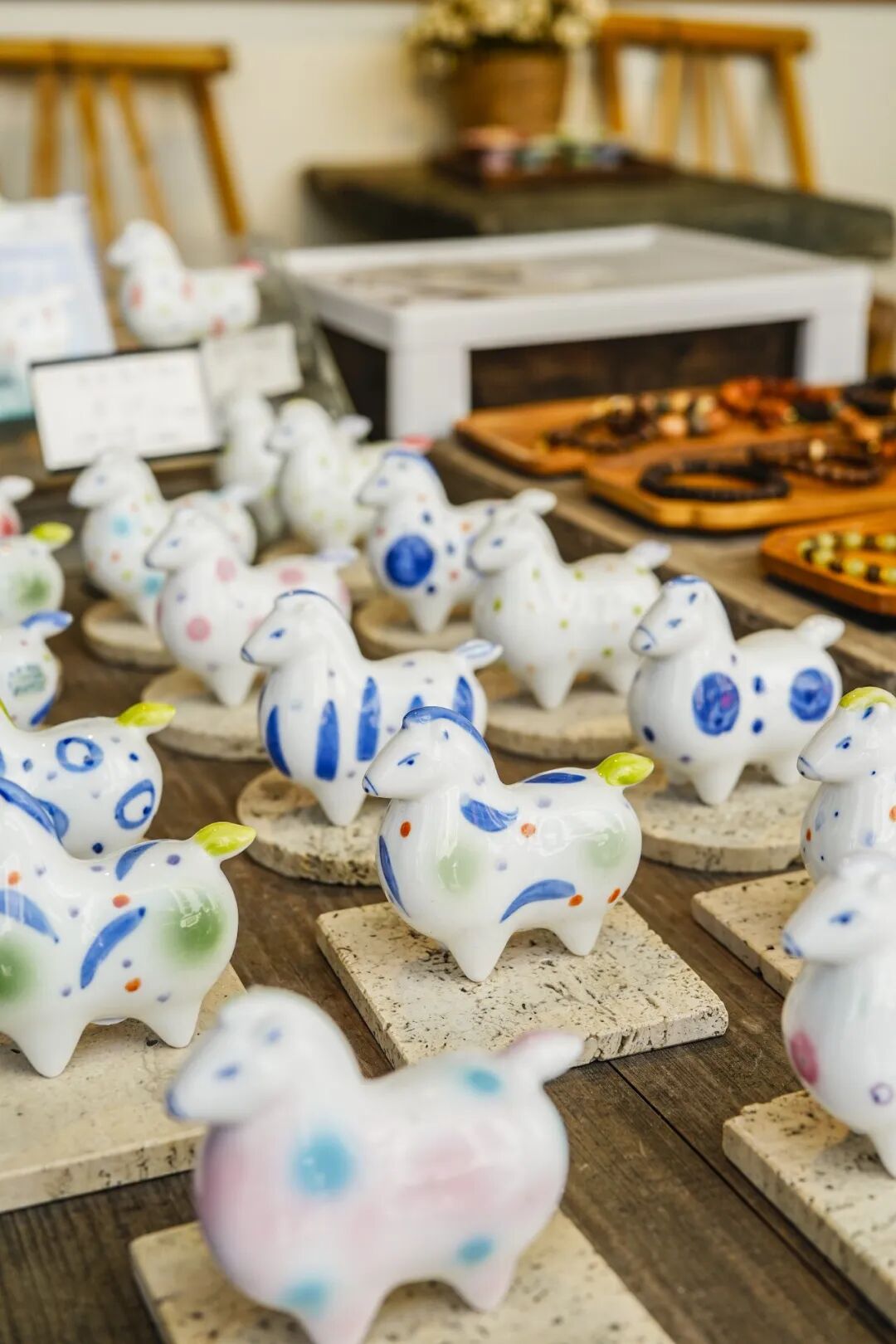
Walk through the stalls at Taoxichuan on a weekend and you will see exactly this in miniature: hand-painted figurines, glaze experiments, one-off pieces that would never come out of a factory line, made by people who moved here because this is still, after a thousand years, where porcelain happens first.
A Living Archive, Still Being Written
Jingdezhen holds the richest, most continuous ceramic-history record anywhere on earth: kiln sites stacked in layers from the Song and Yuan dynasties, the ruins of the Ming and Qing imperial kiln works, and untold thousands of preserved shards. Researchers recently launched the world’s first knowledge-graph database dedicated to ancient ceramics here, cataloguing the glaze chemistry, firing temperature, and microstructure of tens of thousands of historic fragments and opening the data to scholars everywhere. Standing at the naming site in Gaoling today, it’s easy to forget you’re looking at the origin point of a word used in geology classrooms worldwide. That’s the quiet thing about Jingdezhen: the ground under your feet keeps turning out to be more consequential than it looks.
In July 2026, this whole production landscape, from the imperial kilns to the raw material sites, was formally recognized with UNESCO World Heritage status. It is a new line on an old resume. If you want to see where it all happens, in the workshops, the kiln sites, and the markets, our Full-Day Guided Experience and custom itineraries are built around exactly that.
Have a Question About This Trip?
Send us a quick note and we will get back to you.