
Yantai Village sits in Jiangcun Township, Fuliang County, about an hour’s drive into the hills from central Jingdezhen. It’s not on most tourist itineraries yet, which is exactly why I like taking guests there.
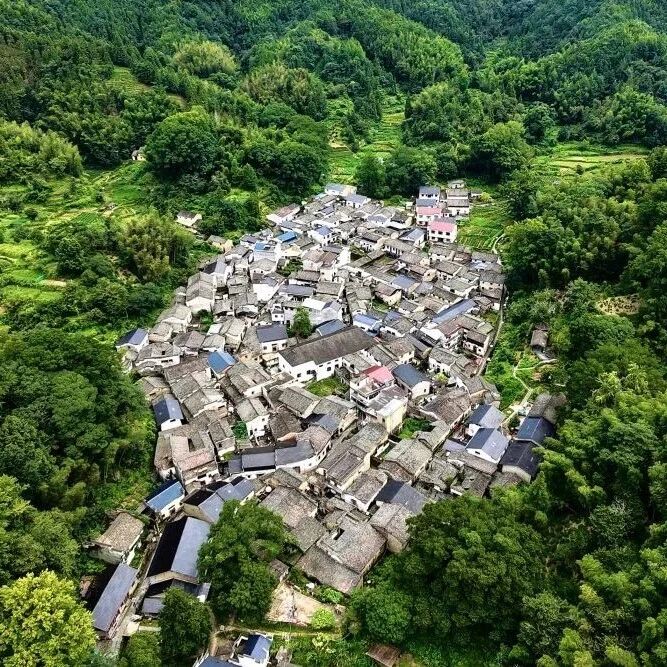
A Village Shaped Like a Leaf
Yantai is close to 2,000 years old. It was originally called “Yanxi,” after the stream that still runs through it. In the Southern Song dynasty, a settler named Jiang Zhongren moved his family here and renamed it “Yantai” out of admiration for Yan Ziling, a Han-dynasty recluse famous for turning down high office. The name stuck for eight centuries.
Mountains close in on three sides, with the Yanxi stream guarding the fourth, so from above the whole settlement looks like a single leaf, with the lanes running through it like veins. That’s not a coincidence. Villages in this part of Jiangxi were laid out with defense and feng shui both in mind, and Yantai is one of the more intact examples still standing.
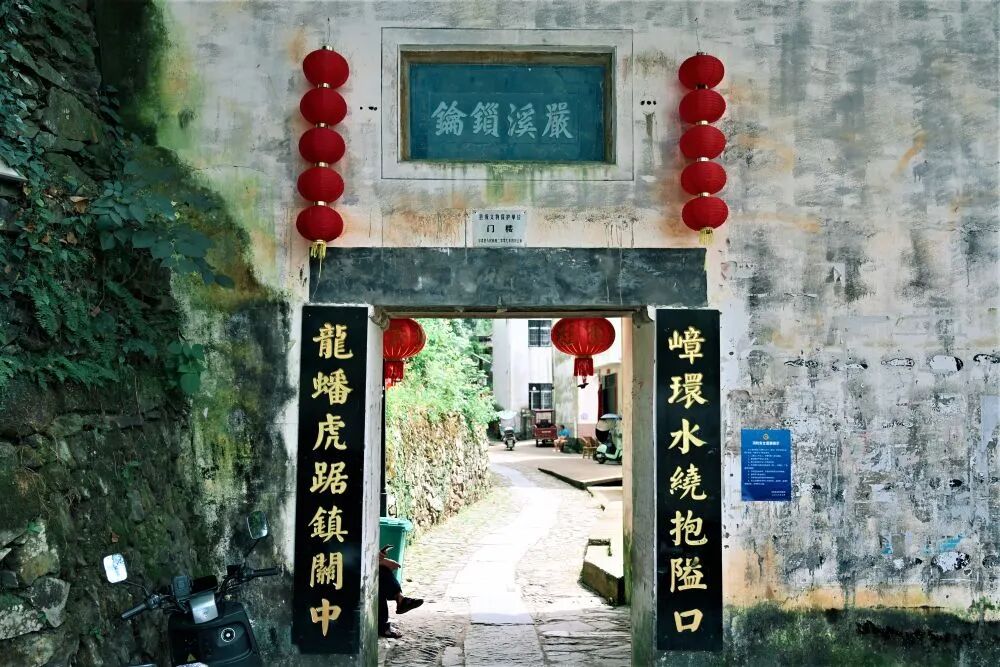
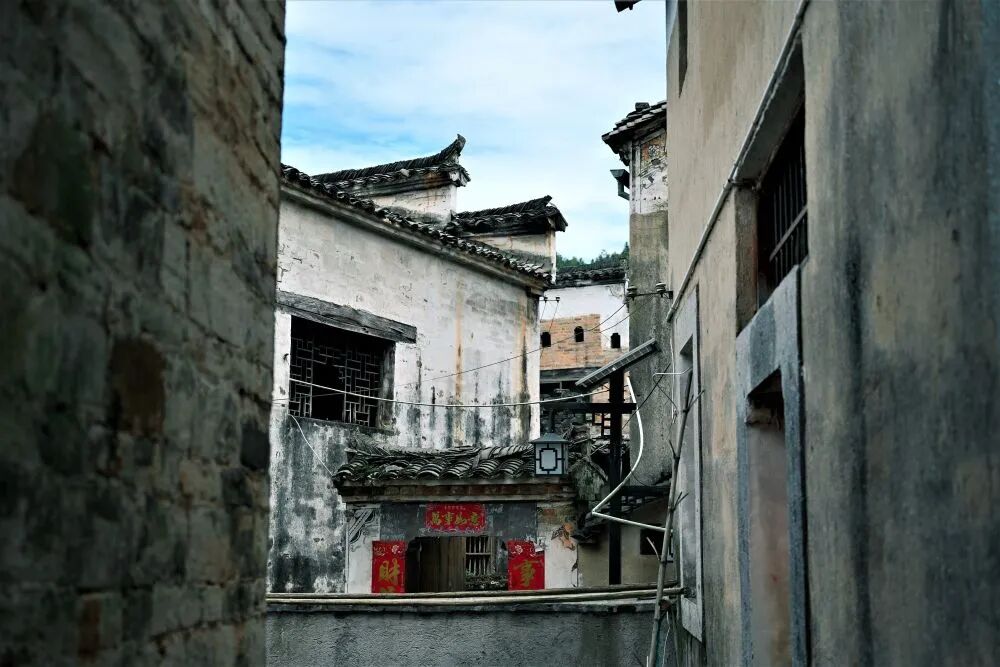
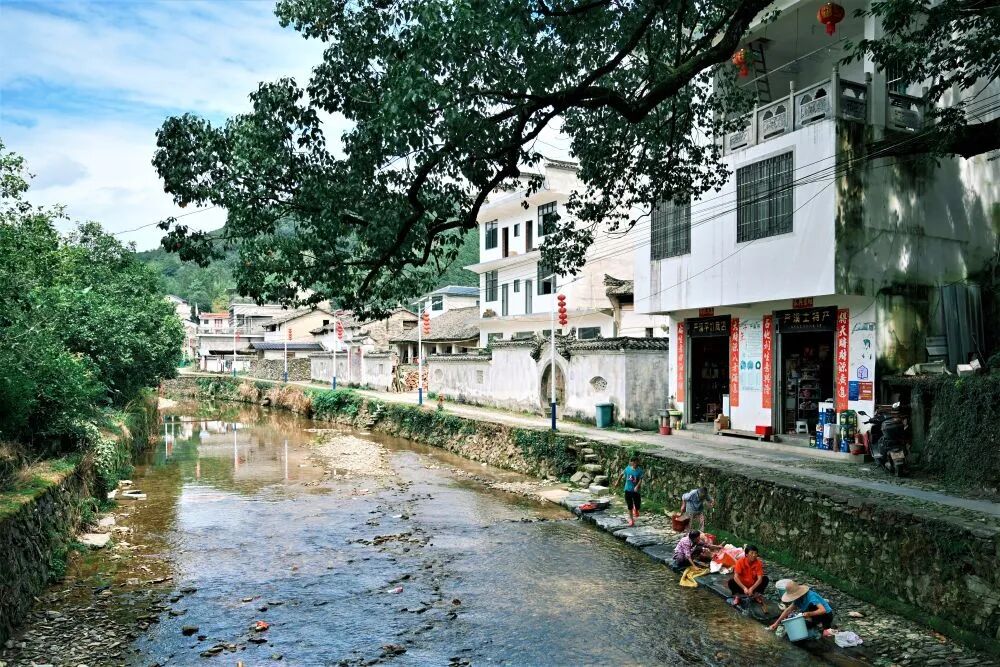
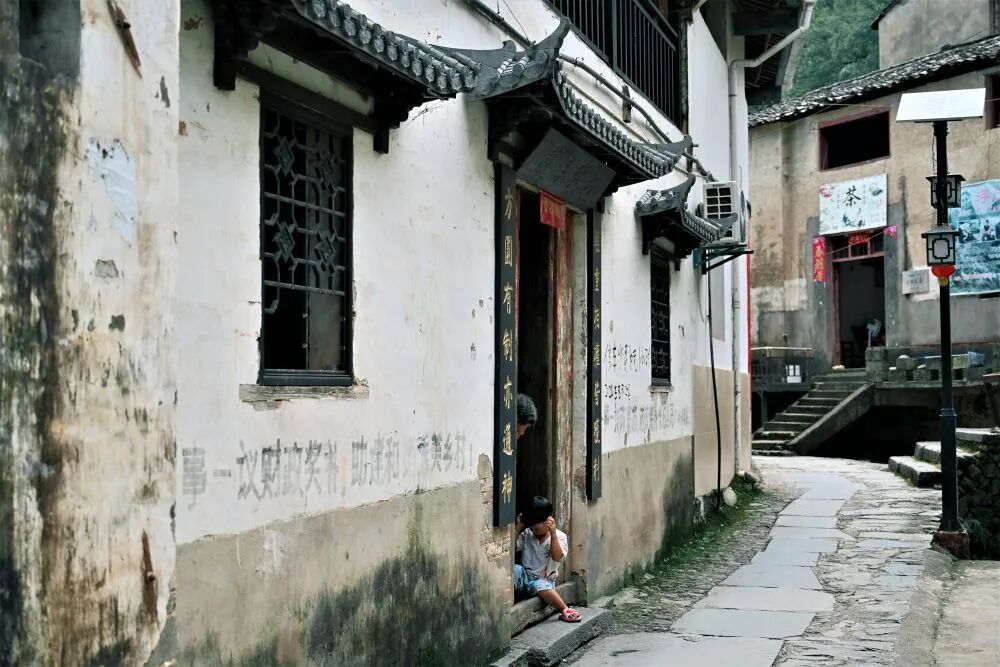
You enter through a stone gate called Yanxi Suoyao, “the lock and key of Yanxi,” once the only way in or out. Just beyond it is Fuchun Bridge, a single-arch stone bridge built in 1502, in the Ming dynasty. Inside the gate, roughly 140 traditional houses survive, most of them in the Hui architectural style shared with nearby Anhui province: white walls, dark stepped “horse-head” gables, and brick, wood, and stone carvings around the doorways that are still sharp enough to make out the birds and mythical animals carved into them.
The Tea That Made Yantai’s Name
Long before tourism, Yantai was known for tea. Bai Juyi’s Tang-dynasty poem “Pipa Xing” has a line about a merchant who “went to Fuliang last month to buy tea,” and Fuliang tea was already famous enough by then to be worth a poem. Yantai was part of that trade.
By the Qing dynasty’s Daoguang era, the village had over 4,000 mu of tea gardens. The Tianxiang Tea Company, run by a local named Jiang Zifu, produced a congou black tea that represented China at the 1915 Panama-Pacific International Exposition in San Francisco and won a gold medal there. In 2022, Yantai was named a candidate heritage site for the joint nomination of the Tea Road (Wanli Chadao), the historic overland tea trade route between China and Russia.
The tea gardens are still here, wrapping around the hills above the village, and tea is still the thing locals talk about first when you ask what makes Yantai different from other old villages nearby.
The Last Traditional Oil Press in Jiangxi
One building worth seeking out is the Daxin oil press, over 500 years old and, as far as anyone has documented, the only traditional oil press in Jiangxi still standing with its original equipment intact. The hand-operated gear inside dates to the late Ming and early Qing dynasties, and the whole process, roasting the seeds, grinding them, loading the press, and striking the wedge to force out the oil, is still done the old way. It was recognized as a Jiangxi provincial industrial heritage site in 2025.
From Empty Houses to Tea-Stays
Like a lot of mountain villages in China, Yantai went through a rough stretch. Young people left for work in the cities, mudbrick houses fell into disrepair, and the place felt like it was fading. What’s turned that around is a homestay movement built around the village’s two real assets: the old buildings and the tea gardens.
Rundown houses have been converted into boutique guesthouses rather than torn down, and the mountain paths connecting them have been upgraded into proper walking trails. One property, Yunliwuli Tali, has been rated a national A-grade tourism homestay. Several places now lean into what locals call “cha su,” or “tea-stays,” pairing a room with direct access to the surrounding tea gardens, sometimes with the chance to help pick or process a batch yourself depending on the season.
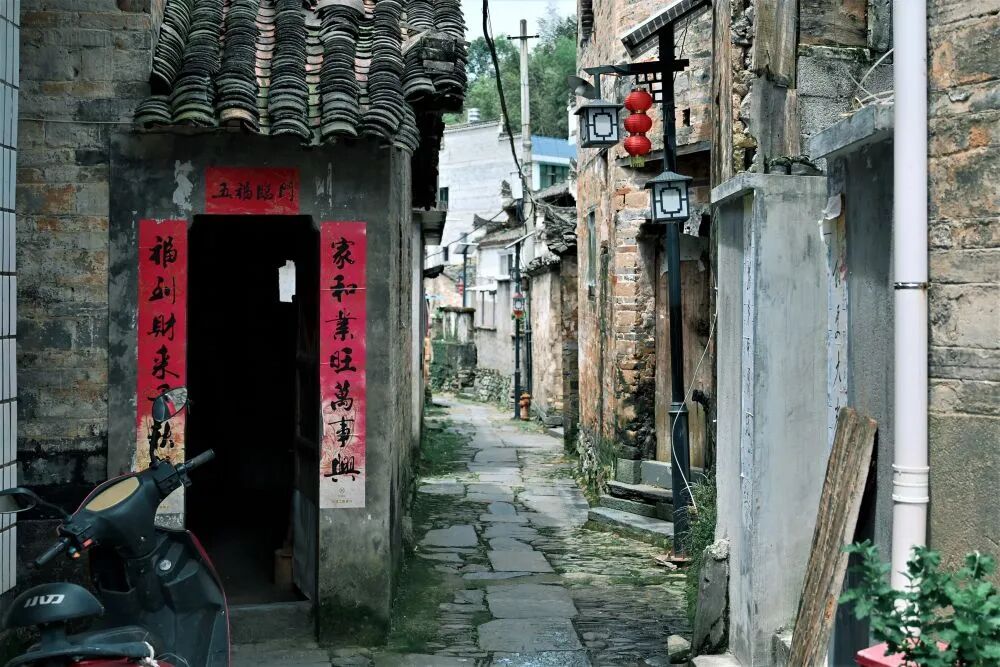
It’s still a working village, not a resort. You’ll see laundry drying by the stream and motorbikes parked outside doorways strung with red couplets. That’s part of what makes it worth the drive.
Visiting Yantai
Yantai isn’t set up as a ticketed attraction. There’s no entrance fee and no fixed visiting hours, since it’s a real village where people live. The honest trade-off is that it’s harder to reach independently than the sites closer to Jingdezhen: it’s a mountain drive out to Jiangcun Township, and public transport options are limited, so most visitors either drive themselves or arrange transport in advance.
If you want to actually stay in one of the tea-stay guesthouses, or want a driver who knows which lanes lead to the oil press and the old tea gardens rather than just the photogenic gate, that’s exactly the kind of thing we build into a custom itinerary. Yantai pairs naturally with a stop at the Fuliang Ancient County Yamen, about 40 minutes away — a well-preserved Qing dynasty government complex that covers the administrative side of Fuliang’s history, while Yantai covers the tea side.
Have a Question About This Trip?
Send us a quick note and we will get back to you.