
Most visitors to Jingdezhen want to take some porcelain home. The hard part is that the city has too much of it. There are night markets, student markets, wholesale streets, master galleries and a pre-dawn antiques market, and a cup that costs 20 RMB in one place can look a lot like a cup that costs 800 in another.
Knowing how Jingdezhen porcelain is made makes it much easier to tell a good piece from a cheap one.
We live here. Lucas grew up on Shuguang Road, which is now lined with ceramic tableware shops, and our own office sits inside the Guomao Ceramic Market. This guide covers where locals actually shop, what things cost, how to tell handmade work from factory pieces, and how to get it all home in one piece.
The Short Answer
- For contemporary pieces by young makers: the Taoxichuan weekend market.
- For handmade work at honest prices: the Letian Saturday morning market, the weekend markets at the Sculpture Porcelain Factory, and the Ceramic University Youth Market.
- For everyday tableware and teaware: Shuguang Road and the Guomao Ceramic Market.
- For something special from a named artist: go to the studio or gallery directly, ideally with someone who can introduce you.
- For antiques: look, enjoy, and be very careful about buying (see below).
Jingdezhen Market Calendar (Updated October 2026)
Most of Jingdezhen’s craft markets run on a weekly schedule. This is the current timetable, checked with local organisers’ listings:
Want to see it day by day? Open our Jingdezhen market calendar and tap your travel dates to see which markets are on while you are here.
| Market | Days | Hours | Where | Best for |
|---|---|---|---|---|
| Taoxichuan Creative Market | Fri, Sat, Sun | 16:30–22:00 | Taoxichuan | Young makers, contemporary pieces, gifts |
| Taoxichuan Designer Market | Thu, Fri, Sat | 16:00–22:00 | Taoxichuan | More polished, design-led work |
| Letian (Pottery Workshop) Creative Market | Sat | 09:30–12:30 | Xianghu, east Jingdezhen | Independent potters, handmade cups and bowls |
| Ceramic University Youth Market | Wed, Thu | 15:00–22:00 | Zhushan East, outside the centre | Student work at honest prices |
| Ming-Qing Garden Market | Sat, Sun | 08:00–20:00 | Sculpture Porcelain Factory, south gate | Traditional styles, wide range |
| Su Space Craft Market | Sat, Sun | 09:00–17:00 | Sculpture Porcelain Factory, south gate | Handmade craft and small studios |
| Taoyang New Village Night Market | Daily | 19:00–23:00 | Taoyang New Village | Evening browsing, everyday pieces |
| Ghost Market (antiques) | Mon | Before dawn | Shuguang Road area | Old porcelain and curiosities, for looking |
| Guomao Ceramic Market on Shuguang Road | Daily | Shop hours | City centre | Tableware, teaware, bulk buying |
Special markets this autumn
- National Day week (1–7 October 2026): extra market days. The Taoxichuan Creative Market runs every evening 1–7 October. The Ceramic University Youth Market runs 1–4 October (14:00–22:30), split across two venues with different stallholders. The two Sculpture Factory markets also open 1–4 October.
- Taoxichuan Designer Market extras: 4–6 October and 18–19 October.
- Taoxichuan Spring and Autumn Fair: 16–19 October, 15:00–22:00. The biggest market of the season.
- Taoxichuan tea-ware theme market: 17–19 October, 16:30–22:00.
Organisers sometimes change dates at short notice, especially around holidays and bad weather. If you are planning your trip around a market, message us and we will confirm what is on that week.

Where to Buy Porcelain in Jingdezhen
Taoxichuan Market
Open in Google Maps · 陶溪川文创街区
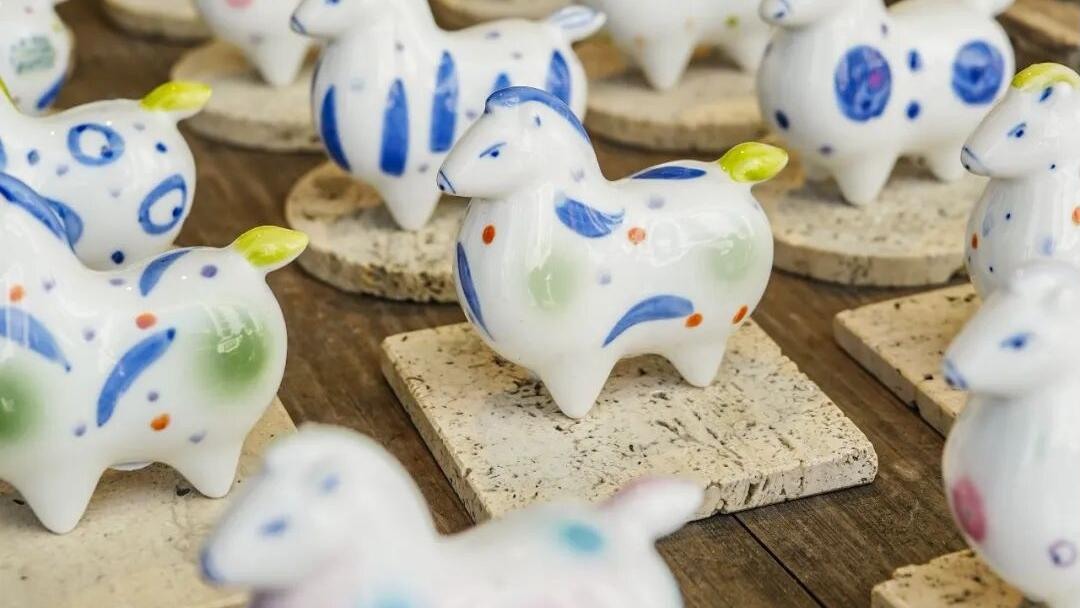
Taoxichuan is a converted state porcelain factory, now full of galleries, cafes and studios. On weekend evenings its outdoor market fills with stalls run by young ceramic artists, many of them recent graduates. This is the easiest place for a first-time visitor to find something modern and personal: speckled glazes, playful figurines, hand-painted cups. Prices are mostly fair, and most stall owners are also the makers. See our Taoxichuan guide for how to get there.
The Sculpture Porcelain Factory
Open in Google Maps · 雕塑瓷厂
The Sculpture Porcelain Factory is a working district of small studios, kiln services and supply shops. It is where many independent potters work, and a good place to see pieces being made. On weekends two markets set up by the south gate: the Ming-Qing Garden Market, which is bigger and more traditional, and the smaller Su Space Craft Market a hundred metres further in.
Letian Market
The Saturday morning market run by The Pottery Workshop (Letian) used to be held at the Sculpture Factory. It moved some time ago to the Xianghu area in the east of the city, so older guides and maps often send people to the wrong place. It is smaller and more curated than Taoxichuan, with a lot of genuinely handmade work at reasonable prices. It only runs 09:30 to 12:30, so go early; the good pieces go first.
Ceramic University Youth Market
Students and recent graduates of Jingdezhen Ceramic University sell their own work here on Wednesday and Thursday afternoons and evenings. Prices are some of the fairest in the city, and you are often buying from someone at the very start of their career. It is a drive from the centre, so it is worth combining with something else nearby.
Shuguang Road
Open in Google Maps · 曙光路
This is the street Lucas grew up on. It is mostly shops selling tableware and teaware to other Chinese buyers, not to tourists, so the prices reflect that. Quality ranges from basic to very good. It is a good place to buy a set of plates or a tea set you will actually use.
Guomao Ceramic Market
A large, busy market for everyday ceramics and gifts, and where our own office is. You will find plenty of mass-produced pieces here, and also some very good ones mixed in. It rewards a patient eye.
Artist Studios and Galleries
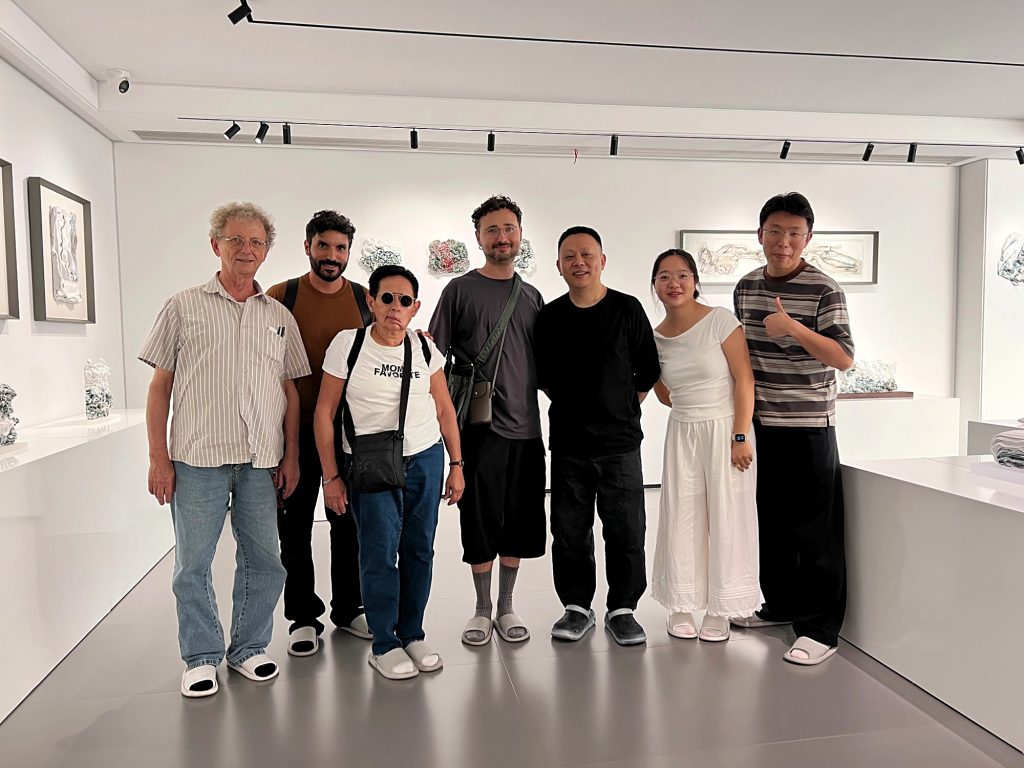
If you want a signed piece from a specific artist, buy it at the studio. You will usually pay the artist’s normal price, you get the story behind the piece, and you know exactly who made it. The challenge is that most studios are not signposted in English and many do not take walk-ins. This is the main reason people book our Porcelain Buying Guide.
Seen an artist’s work online and can’t find them? That is exactly how this afternoon started.
The Ghost Market
Jingdezhen’s “ghost market” (guishi) is an antiques market that starts before dawn on Monday mornings, near Shuguang Road. The name comes from the hour. Most of what is laid out is older porcelain, with genuine old pieces and convincing fakes side by side, and very little to tell you which is which. It is a fascinating place to walk through with a torch and a coffee. Our local advice: go for the atmosphere, not to buy (more on that below).
Taoyang New Village Night Market
Open in Google Maps · 陶阳新村
A nightly market inside the Taoyang New Village neighbourhood, open 19:00 to 23:00. It is more everyday and less curated than Taoxichuan, and a good option if you are only in town on a weekday.
What Porcelain Costs in Jingdezhen
Prices vary enormously. A hand-painted cup from a student stall might cost 20 RMB. A signed piece from an established artist can run into thousands of dollars. These ranges are a rough guide to what we see at markets and studios:
| Item | Student or factory work | Artisan or handmade | Named artist |
|---|---|---|---|
| Tea cup or small bowl | 15–80 RMB ($2–12) | 100–500 RMB ($15–70) | Higher, set by the artist |
| Tea set (pot plus 4–6 cups) | 200–800 RMB ($30–115) | 1,000+ RMB ($140+) | Several thousand RMB and up |
| Decorative vase | 100–500 RMB ($15–70) | 500–3,000 RMB ($70–430) | $500–5,000+ |
| Small sculpture or figurine | 50–300 RMB ($7–43) | Varies | Much more for gallery artists |
Why two similar cups can differ 20 times in price
The price of a piece mostly comes down to four things:
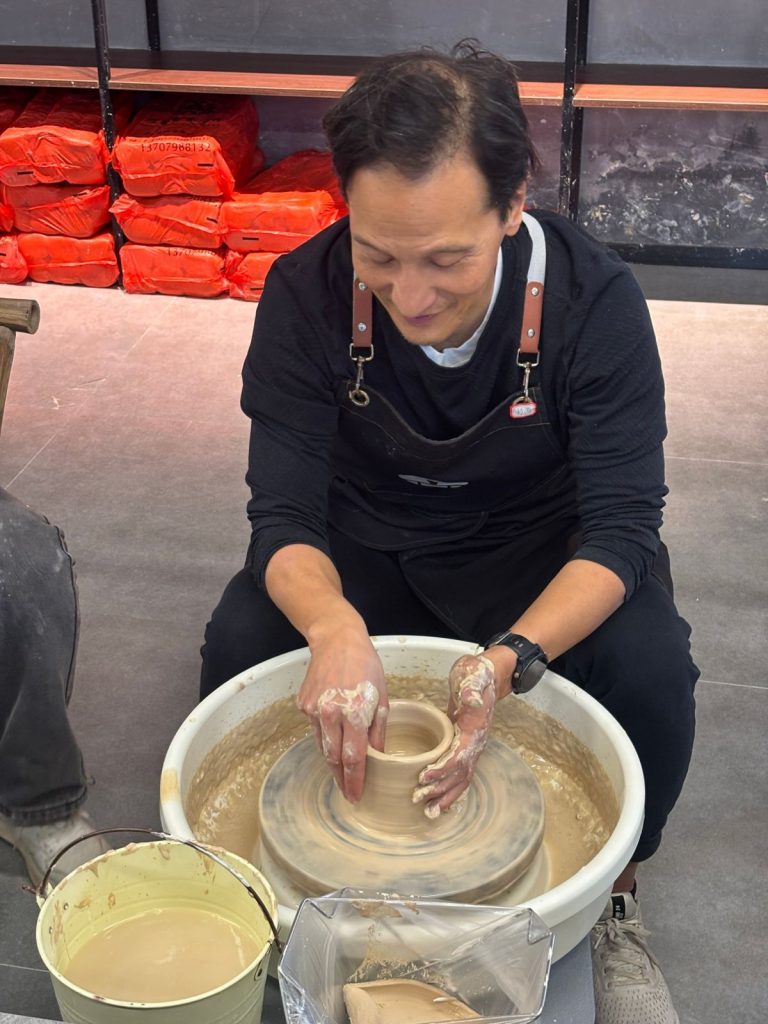
- How the body was formed. Thrown on a wheel by hand, or slip-cast in a mould. Moulded pieces can be made by the hundred.
- How it was decorated. Painted by hand, or finished with a printed decal (a transfer sticker fired onto the glaze).
- How it was fired. Gas and electric kilns are standard. Wood firing is slow, unpredictable and much more expensive.
- Who made it. A master’s name, or a gallery that represents the artist, adds a lot.
None of these is “right” or “wrong”. A well-made decal cup is a perfectly good thing to own. It just should not be priced like a hand-painted one.
Would rather make your own? Walk-in DIY painting studios charge about ¥20 a day for a seat, plus ¥8 to ¥20 for a blank cup or plate to paint. See our guide to Jingdezhen’s DIY painting studios for prices and how long firing takes.
How to Tell Handmade From Factory Porcelain
You do not need to be an expert to avoid the most common mistakes. Check these five things:
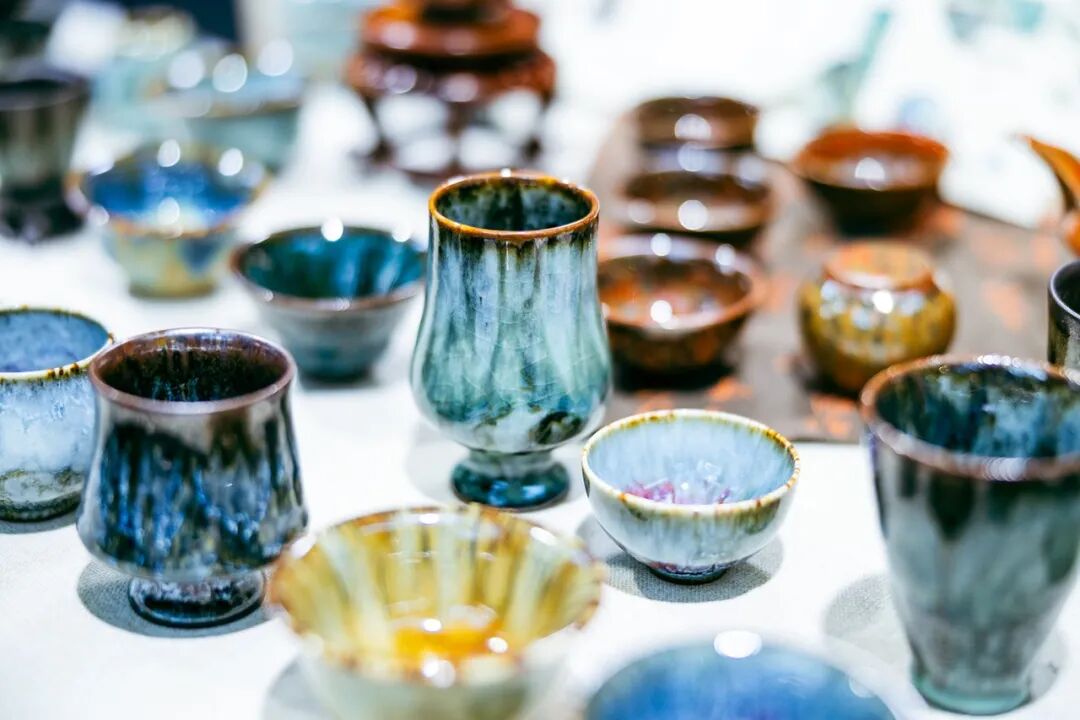
- Look for decal dots and edges. Up close (a phone camera zoom works), printed decals often show a fine dot pattern and perfectly even lines. Hand painting shows brush strokes, with the colour pooling a little where the brush paused.
- Compare with the pieces next to it. If ten “hand-painted” cups on the shelf are identical down to every leaf, they were not painted by hand.
- Feel the inside. Wheel-thrown bowls and cups often have faint spiral throwing lines inside. Slip-cast pieces are usually smooth and perfectly even.
- Turn it over. A hand-trimmed foot ring shows tool marks and small irregularities. A moulded foot is crisp and uniform.
- Ask who made it. At a maker’s stall, the person selling is often the person who made it. They will usually be happy to tell you, and to show you photos of their studio.
Looking for Ru ware? Here’s how one guest chose a gift for his mother, comparing shops at three levels with no pressure to buy.
A Word on Antiques
Jingdezhen has been making reproductions of its own historic porcelain for centuries, and many of them are beautifully made. That is a legitimate craft. The problem is when a reproduction is sold as an antique.
- Reign marks prove nothing. A Ming or Qing mark on the base is trivial to add.
- Artificial ageing is common. Stains, wear and crackle can all be created.
- If the price seems too good, it is. Genuine imperial-period porcelain trades at auction houses, not at market stalls for a few hundred RMB.
- Export rules are strict. China treats objects made before 1949 as cultural relics. They need an official export seal from the cultural relics authorities to leave the country, and pieces made before 1911 generally cannot be exported at all. Without the paperwork, customs can confiscate them.
Our honest advice: buy reproductions as reproductions, at reproduction prices, and enjoy them. We do not appraise or authenticate antiques.

One Design You Will See Everywhere
If you see a small deadpan-faced monk figurine for sale around town, that is the Silent Buddha (wuyu fo). The design started with sculptor Zeng Longsheng decades ago and is still made by his descendants today. It has become one of Jingdezhen’s most-copied souvenirs, so quality and price vary a lot between a mass-produced version and one from a workshop with a real connection to the original.
Bargaining in Jingdezhen
- Market stalls and wholesale shops: asking for a better price is normal, especially if you buy several pieces. Be friendly and reasonable.
- Student makers: prices are usually already low. A small discount for buying a few is fine; hard haggling is not.
- Artist studios and galleries: prices are generally fixed. You are paying for the artist’s work and name.
Most stalls take Alipay or WeChat Pay, both of which now accept foreign Visa and Mastercard cards. Carry some cash for the smallest stalls. See Plan Your Visit for how to set up payments before you arrive.
Getting Your Porcelain Home
Carry it
For cups, small bowls and plates, your luggage is usually the safest and cheapest option. Wrap each piece in clothing, stand plates on edge rather than stacking them flat, and keep everything in the centre of the suitcase. Valuable pieces are safer in your carry-on. Many sellers will also give you a fitted gift box if you ask.
Ship it
For larger or heavier pieces, shipping makes sense, but plan for three things:
- Packing is everything. Porcelain should be double-boxed, or crated for large pieces, with padding on every side. Ask the seller to pack it and take photos before the box is sealed.
- Insurance often excludes breakage. Many couriers treat ceramics as high-risk. Read what the policy actually covers before you pay for it.
- Import duties have changed. The United States ended its duty-free allowance for low-value parcels from China in 2025, so porcelain shipped to the US now pays import duty, and the rates have changed several times since. Other countries have their own allowances. Get a full delivered cost, including duties, before you ship.
If you buy with us, we can arrange proper packing and shipping and give you the total cost upfront.
Frequently Asked Questions
Is porcelain cheaper in Jingdezhen?
Yes, usually by a lot. The same pieces sold in Shanghai, Beijing or overseas carry retail and shipping mark-ups. The catch is that the range is so wide in Jingdezhen that it is also easy to overpay for something ordinary.
What is the difference between Jingdezhen and Dehua porcelain?
Dehua, in Fujian province, is best known for pure white porcelain (blanc de Chine), especially figures and statues. Jingdezhen is known for a much wider range, above all blue-and-white, famille rose and coloured glazes, and for its long history as the source of imperial porcelain.
Can I buy directly from a Jingdezhen ceramic artist?
Yes. Many artists sell from their own studios, and buying there is usually the best way to get a fair price and a real connection to the piece. Most studios do not advertise in English or take walk-ins, so an introduction helps.
Do I need to know about porcelain before shopping?
No. Knowing the basics in this guide will already put you ahead of most visitors. If you want someone beside you who knows the markets and the makers, that is what our guided shopping day is for.
Want a Local by Your Side?
Our Porcelain Buying Guide is a half-day of shopping with an English-speaking local who knows these markets and the people in them. We plan a route around what you are looking for, explain what you are seeing, help at the market stalls, and introduce you to studios you would not find on your own. It starts from US$189 per group. Message us on WhatsApp to check a date.
Have a Question About This Trip?
Send us a quick note and we will get back to you.