
Plan your visit to Jingdezhen

Everything you need to know before you arrive: getting here, when to come, where to stay, and how long to allow yourself.
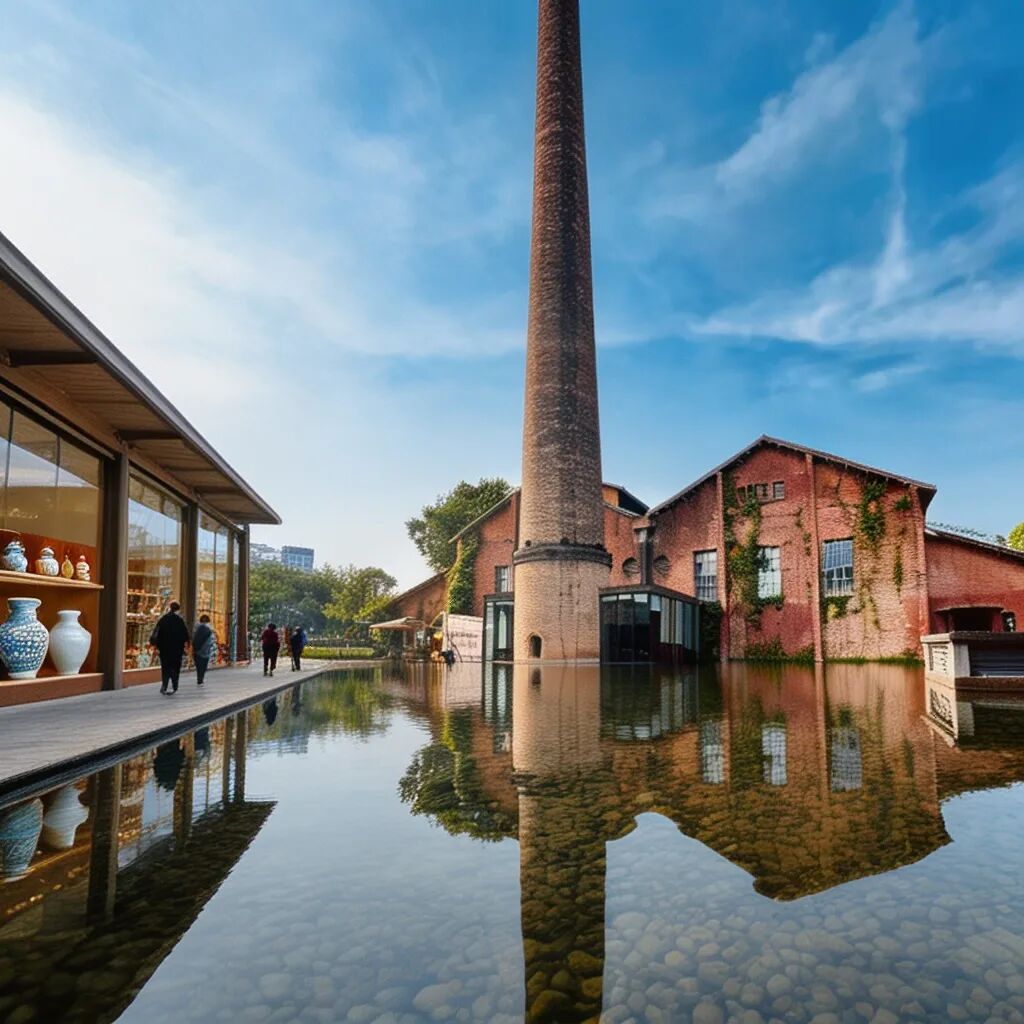
A brick kiln chimney at Taoxichuan reflected in still water
An old kiln chimney at Taoxichuan.
Arrival

Getting to Jingdezhen

A small city, compact enough that getting around is easy once you're here. Both the high-speed rail station and the airport are about 20 minutes from the centre.

Jingdezhen North Station
By high-speed rail

Jingdezhen North Station

Connects to Shanghai, Hangzhou, Nanjing and other major cities. About 20 minutes from the centre by taxi, typically around ¥20. At peak times ride-hailing can be slow, so allow extra time.
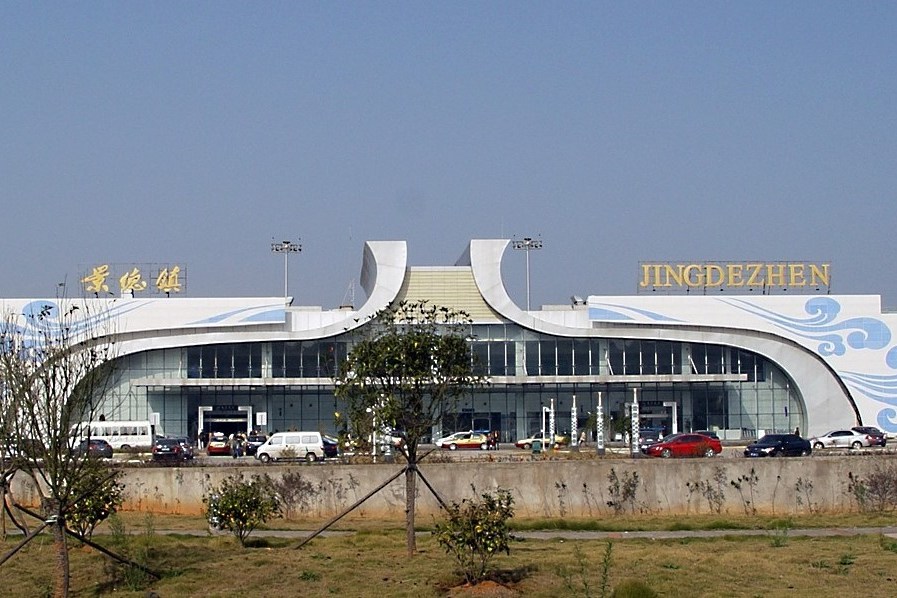
Jingdezhen Luojia Airport terminal
By air

Jingdezhen Luojia Airport

Beijing runs up to 3 times a day. Guangzhou, Chengdu, Xi'an, Tianjin, Urumqi and Ningbo a few times a week. No direct flight to Shanghai or Shenzhen; take the train from Shanghai.

By high-speed train · fastest times
Huangshan41 min
Hangzhou1 h 57 min
Nanjing2 h 39 min
Wuhan2 h 45 min
Shanghai3 h 12 min
By direct flight · Luojia Airport
BeijingUp to 3 a day
NingboAbout 1 h · 4 a week
GuangzhouAbout 1 h 48 min · 3 a week
TianjinAbout 2 h · 4 a week
Xi'an · Chengdu4 a week each

Flying in from overseas? There are no international flights into Jingdezhen; most guests connect through Shanghai or Nanchang. Send us your train or flight when you book and we'll get you from the station or airport to your hotel.

Timing

When to come

A year-round destination, but the season, and the calendar, make a real difference.

Mar – May

Spring

Mild and pleasant, comfortable for walking and exploring.

Jun – Sep · Avoid

Summer

Hot and humid, regularly above 35°C. We'd honestly recommend against it.

Oct – Nov · Best

Autumn

Cooler air, cleaner skies, and an unhurried city.

Dec – Feb

Winter

Cold but manageable. Fewer tourists, lower prices, atmospheric kilns.

Markets worth timing around. Every Thursday to Sunday evening, Taoxichuan runs a market with ceramic stalls and live music. Twice a year, in spring and autumn, a much bigger Grand Fair takes over with hundreds of vendors. Message us and we'll tell you if one lines up with your trip.

Avoid Chinese public holidays. Golden Week (early October and early May) and Chinese New Year bring enormous crowds and sharply higher prices. If your dates overlap, we'll tell you.

Duration

How long to allow

Small enough to feel manageable, deep enough to reward time.

1 day

A full day with us

Enough for one focused experience. Good if Jingdezhen is one stop among several.

See the full-day tour
Recommended2–3 days

The sweet spot

Guided experiences plus independent wandering. Markets in the morning, Taoxichuan in the evening, no rush.

See the 3-day workshop
4+ days

For the obsessed

If ceramics are your thing, many visitors find a resident studio and spend days at the wheel.

See the 7-day intensive
Accommodation

Where to stay

The centre is compact; the two main districts are 10 to 15 minutes apart. Book on reviews and photos rather than location.

Changjiang District

Residential and commercial, easy access to the main sites. Quieter streets, more local feel.

¥200–300 low season · ¥800–1,000 peak

Zhushan District

The heart of the city, close to Taoxichuan and the main ceramic markets. Good for evening walks.

¥200–300 low season · ¥800–1,000 peak

Practicalities

Good to know before you go

Do I need a visa?

It depends on your passport and how you are routing the trip. Citizens of around 45 countries, including the UK, most of the EU, Canada, Australia, New Zealand, Japan and South Korea, can currently enter visa-free for up to 30 days under China's unilateral visa-free policy, in effect through the end of 2026. If you are not on that list, including US citizens, the 240-hour (10-day) visa-free transit policy is the other option, and Jiangxi is one of the provinces it covers, specifically Nanchang and Jingdezhen, but only if you are transiting onward to a third country or region rather than flying home the same way you came, and you enter through one of the designated international ports. If neither applies to your trip, you will need a standard tourist visa arranged in advance through a Chinese embassy or consulate. Rules change and depend on your exact itinerary, so confirm current eligibility for your passport before booking, and message us if you want a second opinion, we deal with this for every guest.

Will my phone work here?

An international roaming plan or a tourist eSIM will get you online, but mainland China blocks Google, WhatsApp, Instagram and Facebook regardless of which SIM you use, this is true everywhere in the country, not specific to Jingdezhen. If you would rather not deal with any of this, just ask us, we can set you up with a reliable VPN solution free of charge before your trip, it is something we handle for our guests all the time. If you prefer to sort it out yourself, install and test a VPN before you fly, VPN providers' own websites and app stores are blocked once you land, so it cannot be set up after arrival. If you plan to use WhatsApp, download it in advance too, it is no longer available in China's app store. WeChat is what everyone here actually uses day to day, worth having installed either way.

How do I pay for things?

WeChat Pay and Alipay are how everyone actually pays here, link a foreign Visa, Mastercard or Amex directly in either app, no Chinese bank account required, and you can pay for almost anything, from hotels to a bowl of noodles at a market stall. Cash has genuinely fallen out of use, we are local and honestly cannot remember the last time we paid with paper RMB. Plain foreign cards are accepted less consistently in a smaller city like Jingdezhen than in Shanghai or Beijing, so do not count on tap to pay alone, having one of these apps set up is what actually matters. Worth carrying a little cash just in case, but do not expect to use it much.

Getting around and the language barrier

Didi, China's equivalent of Uber, has a full English interface and works with a foreign phone number and card. Dropping a map pin gets a more reliable pickup than typing an address in English. The city centre itself is easy to walk. English is limited once you step outside hotels and guides, honestly this is part of why a private guide makes more sense here than in a bigger city, we handle the parts that would otherwise need translating, but a translation app is still worth having for the moments we are not with you.

Any health and safety basics?

Jingdezhen is a low-crime city and China generally has a strong safety record for visitors. Stick to bottled water rather than tap, standard practice across the country. Pharmacies are easy to find but English is limited, for anything beyond a minor over-the-counter need, message us and we will help sort it out.

Packing

What to bring

What to wear

Comfortable walking shoes, cobblestones and uneven surfaces are common. Clothes you do not mind getting dusty, kiln sites and studios can be earthy. Layers in spring and autumn, mornings can be cool and afternoons warm.

What to pack

A WeChat account if possible, useful for payments and local communication. Cash (RMB) for smaller market purchases. A bag with some padding if you plan to buy ceramics, pieces are fragile.

Ready when you are

Questions before you arrive?

We are happy to help with anything not covered here: recommended restaurants, local tips, or how to combine Jingdezhen with other destinations.